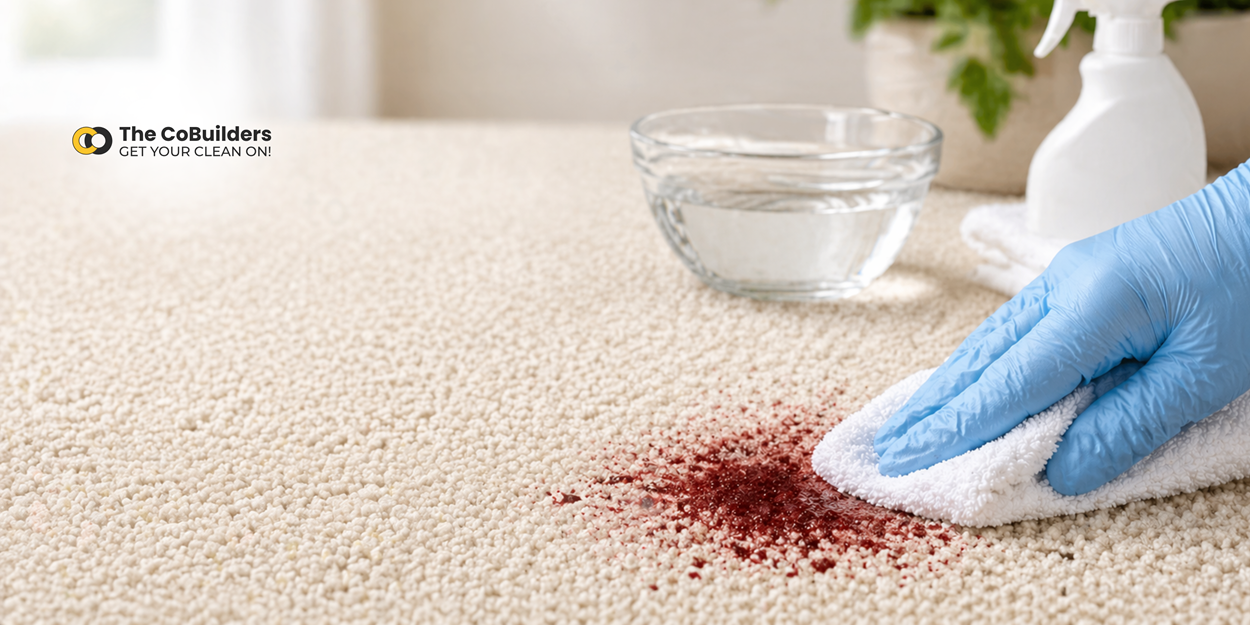
How to Get Blood Out of Carpet Without Damaging Carpet Fibers
Blood stains can happen unexpectedly—from a scraped knee, a kitchen accident, a pet injury, or a medical emergency. While blood may look like a permanent stain, acting quickly and using the right cleaning methods can often restore your carpet without damaging its fibers.
The biggest mistake homeowners make is using hot water or scrubbing aggressively. Blood contains proteins that can bond with carpet fibers when exposed to heat, making stains much harder to remove.
In this guide, you'll learn how to safely remove fresh and dried blood stains, avoid common cleaning mistakes, and know when it's time to call a professional carpet cleaner.
Why Blood Is Difficult to Remove From Carpet
Blood contains proteins that quickly bind to carpet fibers as it dries. Once the proteins set, the stain becomes much more difficult to lift.
Several factors affect how easily blood can be removed:
- How long the stain has been sitting
- Carpet material
- Amount of blood absorbed
- Previous cleaning attempts
- Cleaning products used
Fresh stains are much easier to remove than dried stains, so immediate action is always recommended.
What You'll Need
Before starting, gather:
- White microfiber cloths
- Cold water
- Spray bottle
- Mild dish soap
- Carpet-safe stain remover
- Soft-bristle brush
- Clean towels
- Rubber gloves
Avoid colored towels, as dyes can transfer onto light-colored carpet.
Step 1: Blot the Blood Immediately
If the stain is fresh, gently blot the area using a clean white cloth or paper towel.
Do not scrub.
Scrubbing forces blood deeper into the carpet fibers and may spread the stain over a larger area.
Continue blotting until little moisture transfers to your cloth.
Step 2: Always Use Cold Water
Cold water helps loosen blood proteins without causing them to set.
Lightly dampen a clean cloth with cold water and continue blotting.
Never use hot water.
Hot water can permanently bond blood proteins to carpet fibers, making stain removal significantly more difficult.
Step 3: Apply a Carpet-Safe Cleaning Solution
If water alone doesn't remove the stain, use a carpet cleaner specifically labeled for blood or protein-based stains.
Always:
- Read the manufacturer's instructions.
- Test the product in an inconspicuous location first.
- Apply the cleaner to a cloth rather than pouring excessive liquid directly onto the carpet unless directed otherwise.
Work from the outside of the stain toward the center to avoid spreading it.
Step 4: Continue Blotting
Allow the cleaner to work for several minutes according to the product instructions.
Using a clean cloth, blot the area repeatedly.
Avoid rubbing back and forth.
Repeat the cleaning process until the stain is no longer transferring onto the cloth.
Step 5: Dry the Carpet Thoroughly
Once the stain is removed, blot away excess moisture.
Allow the carpet to air dry completely.
Using fans or increasing room ventilation can speed drying and help prevent mildew or lingering odors.
Why Heat is Your Enemy When Cleaning Blood Stains?
Before you touch a single cleaning agent, you must understand one thing: Never use hot or warm water on blood. Blood contains hemoglobin and other proteins.
When exposed to heat, these proteins coagulate, effectively gluing themselves to the carpet fibers.
To successfully remove a blood stain, you must use cold water. Cold water keeps the proteins in a soluble state, allowing them to be lifted rather than bonded.
Step-by-Step: How to Get Blood Stains Out of Carpet?
If the accident just happened, you have a high probability of total removal without using harsh chemicals.
Blotting Technique
The instinct to scrub is the most common reason carpets are ruined. Scrubbing pushes the blood deeper into the carpet backing and frays the fibers. This causes a fuzzy and distorted texture on your carpet.
- Take a clean, white cloth or paper towel.
- Blot from the outside of the stain toward the center. This prevents the blood from spreading and creating a larger “halo effect.”
- Apply firm downward pressure to absorb as much liquid as possible.
Cold Water Method (For Fresh Stains)
If the blood is still wet, you might not need chemicals yet.
- Fill a spray bottle with plain, cold water.
- Mist the area lightly (do not soak the carpet pad, as this can lead to mold).
- Blot with a dry cloth.
- Repeat until no more color transfers to the cloth.
Saline Solution
If water alone isn't working, salt is a highly effective, non-toxic desiccant for cleaning blood stains.
- Mix two teaspoons of salt with one cup of cold water.
- Spray the solution onto the spot.
- Let it sit for 5 minutes, then blot. The salt helps break down the protein structure without harming delicate wool or nylon fibers.
Advanced Solutions: How to Remove a Dried Blood Stain from Carpet?
If you discovered the mess after it had already dried, the process for stain removal becomes more difficult, but not impossible.
Hydrogen Peroxide
Hydrogen peroxide is a powerful oxidizing agent that specifically targets organic matter. Keep in mind that peroxide can bleach dark or colorful carpets. Always perform a patch test on a hidden area (like inside a closet) before proceeding.
- Use a 3% hydrogen peroxide solution.
- Dab a small amount directly onto the dried blood. You will see it begin to foam. This is the chemical reaction breaking down the blood cells.
- Let it sit for 1-2 minutes.
- Blot with a cold, damp cloth.
- Rinse the area with cold water to ensure no peroxide remains, as it can weaken fibers over time if left to dry.
The Ammonia Approach (For Synthetic Fibers Only)
For stubborn, dried-on messes, an ammonia solution can be the best way to get blood out of carpet, provided the carpet is not made of wool or silk. Ammonia is highly alkaline and will destroy protein fibers like wool.
- Mix 1 tablespoon of clear household ammonia with 1/2 cup of cold water.
- Apply it to the stain and blot.
- Follow up with a rinse of cold water.
Fiber-Specific Care: Protecting Your Investment
Before you begin cleaning blood stains, you must identify what your carpet is made of. This will help you identify the best approach to clean it.

Professional Secrets for Stubborn Blood Stain Removal
To understand how to get blood out of carpet, professionals utilize a few "pro tips" that the average homeowner misses:
Preventing Dry-Out
If you can’t get the whole stain out at once, don't let the wet area air dry slowly. A slow dry can cause wicking, where blood trapped in the backing travels back up to the surface as the water evaporates. After cleaning, place a stack of white paper towels over the spot and weigh it down with a heavy book for several hours to pull all moisture out.
Use a Vacuum
If you have access to a shop vacuum, use it. Instead of blotting, which relies on capillary action, a vacuum uses suction to pull the blood straight up out of the fibers. This is significantly more effective at preventing the stain from reaching the carpet pad.
Neutralizing the pH
If you used a cleaning agent like ammonia or a heavy detergent, you should neutralize the area afterward. A mixture of 1 part white vinegar to 2 parts cold water will bring the carpet's pH back to a neutral state, preventing the area from feeling crunchy once it dries.
Common Mistakes That Ruin Carpets
When you are focused on cleaning blood stains, avoid these common mistakes that lead to permanent damage:
- Dish Soap with Bleach: Never use a dish soap that contains bleach. It will create a permanent white spot on your carpet.
- Over-Saturation: Flooding the carpet with water will cause the blood to seep into the padding. Once blood is in the pad, it is nearly impossible to remove, and it may cause odors or resurface weeks later.
- Steam Cleaners: Do not use a heat-based steam cleaner on a blood stain until the stain is 100% gone. The heat will set any remaining traces of the protein.
Different Carpet Types Require Different Care
Not every carpet responds the same way.
Nylon
Durable and generally responds well to stain removal.
Polyester
Naturally stain resistant but can hold oily residues.
Wool
Requires extra care because harsh chemicals can damage natural fibers.
Berber
Its looped construction can trap blood beneath the surface, making careful blotting especially important.
Always follow your carpet manufacturer's care recommendations.
Can Hydrogen Peroxide Remove Blood?
Hydrogen peroxide is sometimes used on light-colored carpets because it can help break down blood stains.
However, it may discolor certain carpet fibers.
Always perform a spot test in a hidden area before using it.
If your carpet is dark, patterned, antique, or wool, consult the manufacturer's recommendations before using peroxide.
Does Baking Soda Remove Blood?
Baking soda may help absorb odors after the stain has been cleaned, but it is not a primary blood stain remover.
Focus on removing the blood first before treating any remaining odor.
Can Vinegar Remove Blood From Carpet?
Some homeowners use diluted white vinegar for stain removal.
However, vinegar is not appropriate for every carpet type and may affect certain fibers or dyes.
Use products specifically designed for carpets whenever possible.
Will Blood Permanently Stain Carpet?
Not necessarily.
Fresh blood removed quickly often leaves little or no visible staining.
Older stains become more difficult because blood proteins bind more tightly to carpet fibers over time.
Prompt action provides the best chance of complete removal.
Pet Blood vs Human Blood
The cleaning process is generally the same whether the blood came from a pet or a person.
However, pet injuries may also introduce dirt, bacteria, or bodily fluids into the carpet.
If the affected area is large or accompanied by odors, professional cleaning may be the safest option.
When Should You Call a Professional Carpet Cleaner?
Professional cleaning is recommended when:
- Blood has soaked into carpet padding
- The stain covers a large area
- Multiple cleaning attempts have failed
- The carpet is wool or another delicate fiber
- Lingering odors remain
- The stain has been present for several days
Professionals have specialized equipment capable of extracting contaminants from deeper within the carpet.
Professional Carpet Cleaning With The CoBuilders
Sometimes DIY cleaning isn't enough.
The CoBuilders connects homeowners with more than 10,000 vetted professional cleaners nationwide who can help restore carpets, upholstery, and living spaces after spills, stains, and everyday accidents.
With transparent pricing, convenient online booking, and trusted cleaning professionals across the United States, getting help is quick and simple.
Whether you need routine house cleaning or help with stubborn carpet stains, The CoBuilders makes it easy to find experienced professionals near you.
Frequently Asked Questions
How do you get fresh blood out of carpet?
Blot immediately using a clean cloth and cold water. Avoid rubbing, then use a carpet-safe stain remover if needed.
Can dried blood be removed from carpet?
Yes. Dried blood can often be removed by rehydrating the stain with cold water and using a carpet cleaner formulated for protein-based stains.
Should I use hot or cold water?
Always use cold water. Heat can permanently set blood proteins into carpet fibers.
Can hydrogen peroxide damage carpet?
It can discolor certain carpets. Always test a hidden area before use and follow manufacturer recommendations.
Is vinegar safe for all carpets?
No. Some carpet materials and dyes may react poorly to vinegar. Carpet-specific cleaners are generally the safer option.
Does baking soda remove blood stains?
Baking soda is better for odor control than stain removal. Remove the blood first, then address any remaining odor.
Can professional carpet cleaning remove old blood stains?
Many old stains can be significantly improved or removed using professional cleaning equipment, particularly if previous DIY attempts have not been successful.
Featured Posts
3.88 min read
The Complete Commercial Cleaning Checklist for Businesses

3.1 min read
Homeaglow Scam? Hidden Fees, Customer Complaints & Honest Review

3.26 min read
How to Start Government Contracting: A Step-by-Step Guide for Small Businesses in 2026

4.82 min read
How to Clean Urine Off a Leather

2.75 min read
Cleaner Services Near Me: Find Trusted Professionals for a Cleaner, Healthier Home

2.86 min read
How Does Homeaglow Work? Understanding Online Cleaning Platforms

2.66 min read
Cleaning Jobs: Build Income and Opportunity as a Professional Cleaner
2.42 min read
Cleaning Near Me: A Better Way to Find Trusted Professional Cleaners
2.84 min read
How to Clean Washer Machines: A Complete Guide to a Fresher Laundry Room

3.62 min read
Cleaning Services Near Me: How to Choose a Cleaning Company You Can Trust