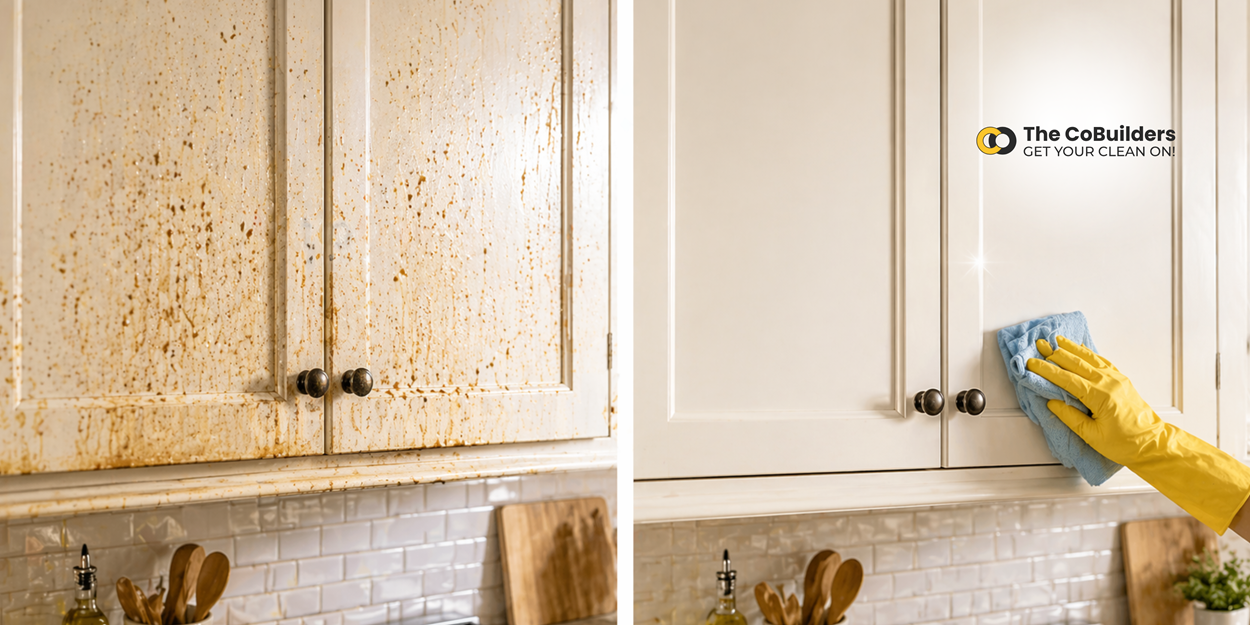
If your kitchen cabinets feel sticky, dull, or greasy, you are not alone. Cooking releases tiny oil particles into the air. These particles settle on cabinets and slowly mix with dust. Over time, the surface becomes a stubborn layer of cooking residue that regular wiping cannot remove.
The good news is that you can clean kitchen cabinet surfaces properly without damaging them. You just need the right method and patience. Keep on reading to find out the correct method.
Why do Cabinets Become So Greasy?
Every time you fry, sauté, or cook with oil, vapor rises and lands on cabinet doors. Heat dries the oil and creates a hardened film. Dust sticks to it and makes cleaning harder.
Scrubbing aggressively is the biggest mistake people make. Harsh scrubbing can ruin finishes faster than grease does.
How to Clean Kitchen Cabinets Properly? Step-by-Step Guide
1. Start with a Mild Solution
The best way to clean kitchen cabinets is to begin with a gentle solution.
- Mix warm water with a few drops of dish soap
- Use a microfiber cloth, not a rough sponge
- Wipe gently, especially around handles and edges
Dish soap works because it breaks down oils instead of spreading them around. Keep in mind that water damages wood and laminate.
2. Break Down Heavy Oil Residue
If grease still feels sticky, upgrade your method. Try one of these safe options:
- Equal parts vinegar and water for grease cutting
- Baking soda paste for thick buildup
- A few drops of cooking oil to soften hardened grease before wiping
Oil dissolves old grease because similar substances loosen each other. Work in small sections. Let the cleaner sit for 1-2 minutes. Then wipe clean.
3. Deep Clean Kitchen Cabinets
When buildup has been ignored for months, a surface wipe is not enough. To deep clean kitchen cabinets:
- Empty cabinets completely
- Clean inside shelves and corners
- Use a soft brush or toothbrush for grooves
- Rinse with a damp cloth
- Dry immediately with a microfiber
Experts recommend deep cleaning once or twice yearly to stop grease accumulation.
Common Kitchen Cabinet Cleaning Mistakes to Avoid
Most cabinet damage happens during cleaning. Avoid using:
- Using hot steam on wood cabinets
- Scrubbing aggressively
- Spraying cleaner directly onto surfaces
- Using bleach or harsh degreasers without testing
Gentle, repeated cleaning always beats aggressive one-time cleaning.
When Do You Need a Deep Professional Clean for Your Kitchen?
If cabinets feel permanently sticky, smell oily, or look yellow despite repeated cleaning, professional help saves time and prevents damage. A professional kitchen cleaning service uses commercial degreasers, safe techniques, and detailed deep cleaning that homeowners often miss.
If you want your kitchen restored instead of temporarily wiped down, consider booking The CoBuilders, who provide nationwide professional cleaning services designed to fully revive greasy kitchens.
Clean cabinets are not about aesthetics alone. They improve hygiene, air quality, and the way your entire kitchen feels every day. Because sometimes the real best cleaning hack is knowing when to call professionals.
Featured Posts

3.88 min read
The Complete Commercial Cleaning Checklist for Businesses

3.1 min read
Homeaglow Scam? Hidden Fees, Customer Complaints & Honest Review

3.26 min read
How to Start Government Contracting: A Step-by-Step Guide for Small Businesses in 2026
7.32 min read
What is the Best Way to Get Blood Out of Carpet Without Damaging Fibers?

4.82 min read
How to Clean Urine Off a Leather

2.75 min read
Cleaner Services Near Me: Find Trusted Professionals for a Cleaner, Healthier Home
2.86 min read
How Does Homeaglow Work? Understanding Online Cleaning Platforms

2.66 min read
Cleaning Jobs: Build Income and Opportunity as a Professional Cleaner
2.42 min read
Cleaning Near Me: A Better Way to Find Trusted Professional Cleaners
2.84 min read
How to Clean Washer Machines: A Complete Guide to a Fresher Laundry Room