
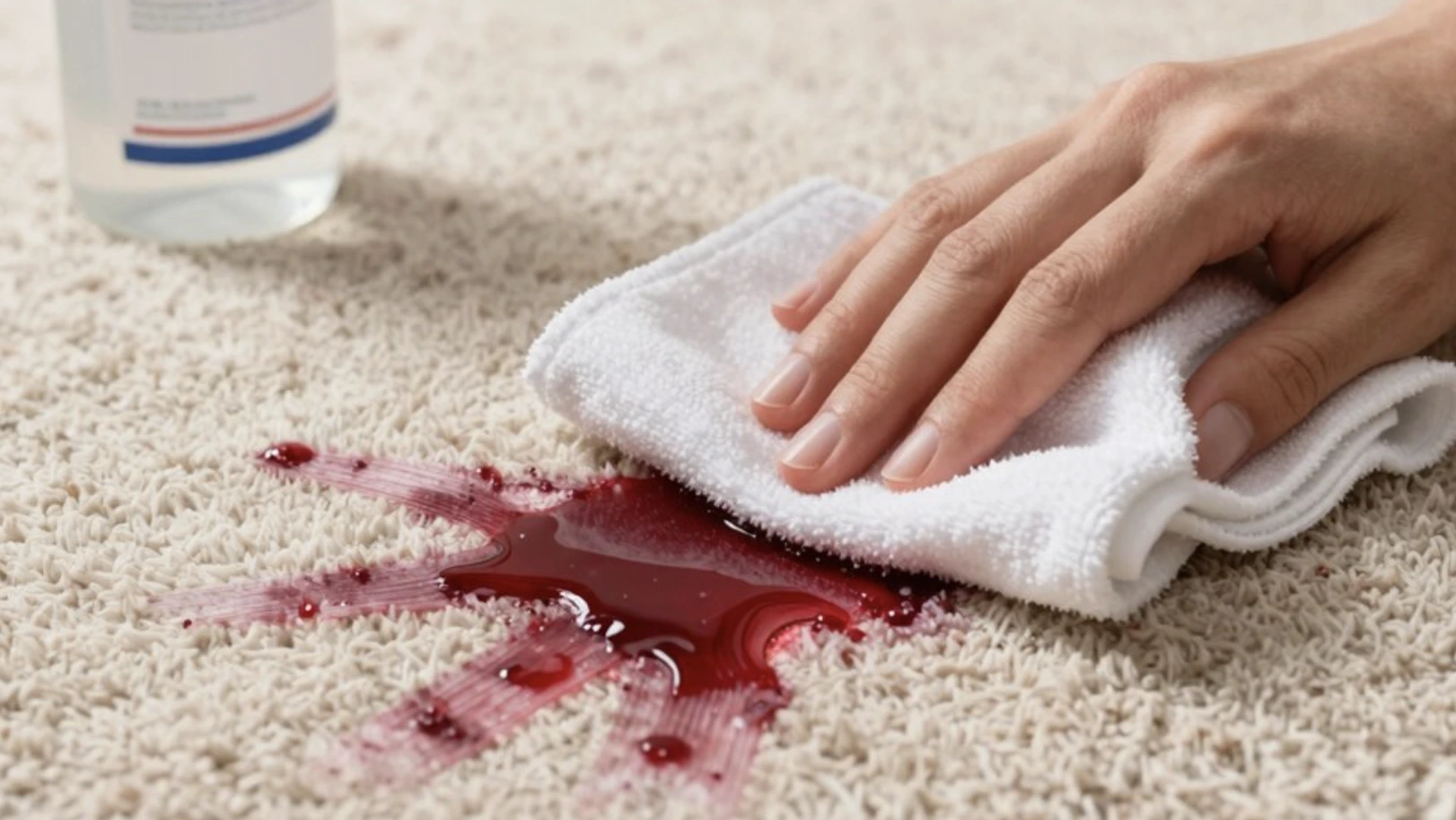
Removing carpet stains is easier when you act quickly, use the right cleaning method, and avoid scrubbing the stain deeper into the carpet fibers.
Spills, muddy shoes, food, drinks, pet accidents, grease, and other everyday messes can all leave marks behind.
But not every carpet stain should be treated the same way.
The best approach depends on what caused the stain, how
long it has been there, and the type of carpet you have.
This guide explains how to remove common carpet stains
safely, what mistakes to avoid, and when professional cleaning
may be the better option.
Why Carpet Stains Can Be Difficult to Remove
Carpet is made of fibers designed to hold up under regular foot
traffic.
Unfortunately, those fibers can also trap:
- Liquids
- Oils
- Dirt
- Food particles
- Pigments
- Pet urine
- Grease
- Mud
- Other household debris
Some spills remain near the surface.
Others can move deeper into the carpet fibers or padding.
The longer a stain remains untreated, the more difficult it may become to remove.
What Should You Do First When Something Spills on Carpet?
The first few minutes can make a major difference.
When a fresh spill happens:
- Remove any solid material carefully.
- Blot up excess liquid.
- Avoid rubbing the stain.
- Work from the outside toward the center.
- Identify what caused the stain.
- Check carpet-care instructions before applying a cleaner.
Acting quickly can help prevent the stain from spreading or soaking deeper into the carpet.
Blot Carpet Stains Instead of Scrubbing
One of the most important rules when removing carpet stains is to blot rather than scrub.
Scrubbing can:
- Spread the stain
- Push it deeper into fibers
- Damage carpet texture
- Cause fuzzing
- Distort the pile
Instead, use a clean white cloth or absorbent towel.
Press gently into the affected area and lift moisture away.
Continue using clean sections of the cloth as the stain transfers.
Test Carpet Cleaning Products First
Before applying any cleaner to a visible area, test it in a small hidden section of carpet.
This can help you identify potential:
- Color fading
- Discoloration
- Fiber damage
- Texture changes
Carpets differ in fiber, dye, construction, and manufacturer recommendations.
A cleaner that works well on one carpet may not be suitable for another.
How to Remove Fresh Carpet Stains
Fresh stains are generally easier to manage than dried ones.
Start by blotting as much liquid as possible.
Then follow the carpet manufacturer's cleaning instructions or use a carpet-safe product appropriate for the substance involved.
Avoid saturating the carpet.
Too much moisture can move deeper into the backing or padding and may take longer to dry.
How to Remove Old Carpet Stains
Older stains may require more patience.
A dried stain may have already bonded with carpet fibers.
Begin by identifying the stain if possible.
Then:
- Remove any dried surface debris
- Apply an appropriate carpet-safe cleaner
- Allow the product to work according to its instructions
- Blot rather than scrub
- Repeat if necessary
- Allow the carpet to dry thoroughly
Avoid continually adding more cleaner without removing the previous residue.
Removing Food Stains From Carpet
Food spills are common in living rooms, dining areas, and around children's play spaces.
Start by carefully removing solid food.
Do not push pieces deeper into the carpet.
Blot any moisture and use an appropriate carpet cleaner based on the food involved.
Foods containing oils, dyes, sauces, or dairy ingredients may require different treatment than simple crumbs or water-based spills.
Removing Coffee Stains From Carpet
Coffee can leave noticeable brown discoloration, particularly on lighter carpets.
For a fresh coffee spill:
- Blot immediately
- Use a clean absorbent cloth
- Work from the edge toward the center
- Avoid rubbing
- Apply a carpet-safe cleaning solution if needed
- Blot again
- Allow the area to dry
Coffee containing milk, cream, sugar, or flavored syrups may leave additional residue that requires attention.
Removing Red Wine Stains From Carpet
Red wine stains can spread quickly.
Blot as much liquid as possible before applying any cleaning
product.
Do not aggressively scrub the area.
Use a cleaning product appropriate for both the carpet and the stain, following the product instructions carefully.
The sooner treatment begins, the better the chances of reducing visible discoloration.
Removing Grease Stains From Carpet
Grease and oil require a different approach from many water-based spills.
Greasy stains may come from:
- Cooking oil
- Butter
- Cosmetics
- Lotion
- Food
- Automotive residue
Blot or lift excess material first.
Then use a carpet-cleaning product specifically suitable for oily stains.
Avoid pouring large amounts of water onto grease because water alone may not break down the oily residue effectively.
Removing Mud Stains From Carpet
Unlike many spills, mud may sometimes be easier to address after the wet soil has dried.
Wet mud can spread if rubbed.
Once dry:
- Vacuum or remove loose soil.
- Treat the remaining discoloration with an appropriate carpet cleaner.
- Blot carefully.
- Repeat as necessary.
Always follow the care instructions for your carpet.
Removing Pet Stains From Carpet
Pet accidents can create two problems:
- Visible staining
- Odor
Blot fresh moisture as quickly as possible.
A cleaning product designed for pet stains may help address
organic residue and odor.
However, make sure the product is compatible with your carpet.
If urine reaches the carpet padding or subfloor, surface cleaning alone may not completely resolve the odor.
Persistent pet odors may require deeper treatment.
Removing Urine Stains From Carpet
Urine should be addressed promptly because it can penetrate beyond the carpet surface.
For a fresh accident:
- Blot excess moisture
- Avoid rubbing
- Use a carpet-safe cleaner appropriate for urine
- Follow product directions
- Allow the area to dry thoroughly
If the odor returns after the carpet dries, the urine may have reached deeper layers.
Professional carpet treatment may be necessary.
Removing Blood Stains From Carpet
Blood stains require special care.
Use cool rather than hot water when appropriate for the carpet and cleaning method.
Heat may cause proteins in blood to become more difficult to remove.
Blot the stain rather than scrubbing it.
Use a carpet-safe stain treatment and follow the manufacturer's directions.
For dried blood stains, repeated gentle treatment may be necessary.
Removing Makeup Stains From Carpet
Foundation, lipstick, mascara, and other cosmetics may contain pigments and oils.
Avoid immediately flooding the area with water.
Instead:
- Lift excess makeup carefully
- Blot rather than rub
- Use a cleaner appropriate for oily or pigmented stains
- Test the cleaner first
- Repeat carefully if needed
Aggressive scrubbing may spread makeup into surrounding fibers.
Removing Ink Stains From Carpet
Ink can be particularly difficult because it can spread quickly.
Avoid rubbing.
Blot carefully and use a carpet-safe product appropriate for ink stains.
Some DIY advice recommends alcohol-based products, but these may not be suitable for every carpet or backing.
Always test first and follow carpet-care recommendations.
Removing Wax From Carpet
Wax requires a different strategy from liquid stains.
Allow spilled wax to harden before attempting to remove large pieces.
Carefully lift hardened material without damaging the fibers.
Heat-based removal methods are sometimes recommended, but excessive heat can damage or melt certain synthetic carpet fibers.
Check the carpet manufacturer's instructions before applying heat.
Removing Gum From Carpet
Do not pull aggressively on chewing gum because this may stretch or damage carpet fibers.
Some methods involve cooling the gum so it becomes firmer and easier to remove.
Whatever method you use, work carefully to avoid cutting or pulling the carpet pile.
Can Vinegar Remove Carpet Stains?
Vinegar appears in many DIY carpet-cleaning recipes.
However, it is not appropriate for every carpet or every stain.
Its effectiveness depends on:
- Carpet fiber
- Dye
- Stain type
- Manufacturer recommendations
- Cleaning product already used
Do not assume vinegar is a universal carpet cleaner.
Test any cleaning method first.
Can Baking Soda Remove Carpet Stains?
Baking soda is commonly used for odor control and light cleaning.
However, it may not remove every stain.
It can also be difficult to remove completely if heavily worked
into carpet fibers.
If using baking soda, follow an appropriate method and
vacuum thoroughly after the area is completely dry.
Can Dish Soap Be Used on Carpet?
A small amount of mild dish soap is sometimes used in homemade carpet-cleaning solutions.
The risk is using too much.
Excess soap can leave residue that attracts dirt later.
If you use a detergent solution, keep it dilute and avoid oversaturating the carpet.
A carpet-specific cleaner may be a safer option for many stains.
Should You Use Bleach on Carpet Stains?
Generally, bleach should not be treated as an ordinary carpet stain remover.
It can discolor carpet fibers and permanently alter dyes.
Only use bleach if the carpet manufacturer specifically indicates that the material is compatible and provides
appropriate instructions.
Never mix bleach with ammonia, vinegar, or other household chemicals.
Why Carpet Stains Sometimes Come Back
You may clean a stain, watch it disappear, and then notice it
returning after the carpet dries.
This is sometimes called wicking.
It can occur when moisture or stain residue remains deeper in
the carpet and moves back toward the surface during drying.
Returning stains may indicate:
- Too much cleaning solution was used
- The carpet was oversaturated
- Residue remains in the backing
- The stain reached the padding
- The area did not dry properly
Repeated surface cleaning may not solve a stain that has penetrated deeply.
How to Remove Carpet Cleaner Residue
Using too much cleaning product can leave carpet feeling stiff or sticky.
Residue can also attract new dirt.
Follow product directions carefully.
Do not assume that more cleaner means better stain removal.
If residue remains, use the rinsing or extraction method recommended for your carpet and cleaning product.
Common Carpet Stain Removal Mistakes
When removing carpet stains, avoid:
- Scrubbing aggressively
- Using very hot water without checking suitability
- Mixing cleaning chemicals
- Oversaturating the carpet
- Applying too much detergent
- Using bleach without manufacturer approval
- Treating every stain the same way
- Applying a cleaner without testing it
- Waiting too long to treat a fresh spill
- Using heat on an unknown stain
- Covering a wet area before it dries
A careful approach is usually safer than an aggressive one.
How to Prevent Carpet Stains
You cannot prevent every spill, but a few habits can reduce staining.
Consider:
- Removing shoes at the door
- Using entry mats
- Cleaning spills quickly
- Vacuuming regularly
- Keeping food in designated areas
- Addressing pet accidents immediately
- Using rugs in high-traffic areas
- Keeping a carpet-safe stain product available
Routine cleaning also prevents loose dirt from being repeatedly ground into carpet fibers.
Vacuum Before Treating Carpet Stains
If the stained area also contains loose dirt, crumbs, or debris, vacuuming first may help.
Removing dry particles prevents them from mixing with cleaning solution and creating additional mess.
Do not vacuum wet spills.
Blot liquids first and allow appropriate drying before vacuuming.
Carpet Stain Removal vs. Carpet Cleaning
Spot treatment and full carpet cleaning are not the same thing.
Carpet stain removal focuses on a specific spot.
Carpet cleaning generally treats a larger surface area.
A carpet can look clean overall while still having several visible stains.
Likewise, removing one stain does not necessarily remove general soil throughout the carpet.
When Should You Call a Professional?
Professional help may be worth considering when:
- The stain is large
- The stain is old
- You do not know what caused it
- DIY treatment made it worse
- Odor continues after cleaning
- The carpet is delicate or expensive
- The stain reached the padding
- Several rooms need treatment
- You are preparing for a move or inspection
Professionals may have access to equipment and cleaning methods that are not practical for routine household use.
Frequently Asked Questions About Removing Carpet Stains
What is the best way to remove a carpet stain?
Identify the stain, remove excess material, blot rather than scrub, and use a carpet-safe treatment appropriate for the substance involved.
Always test cleaning products first.
Should I use hot or cold water on carpet stains?
It depends on the stain.
Hot water may set certain protein-based stains, such as blood.
Follow stain-specific and carpet-care instructions instead of
using the same temperature for every stain.
Can old carpet stains be removed?
Some old stains can be reduced or removed, but results depend on the substance, carpet fiber, previous treatments,
and how deeply the stain penetrated.
Why should I blot instead of scrub?
Scrubbing can spread the stain, push residue deeper, and
damage carpet fibers.
Blotting helps lift moisture and residue away.
What should I do if a carpet stain comes back?
A returning stain may indicate residue or moisture deeper in the carpet or padding.
Additional extraction or professional treatment may be required.
Can I use vinegar and baking soda together on carpet?
DIY combinations are not automatically appropriate for every carpet.
Check carpet-care instructions and avoid assuming household ingredients are universally safe or effective.
How do I remove pet urine from carpet?
Blot fresh urine quickly and use a carpet-safe treatment appropriate for pet stains.
If odor returns, urine may have penetrated into the carpet padding.
Can professional cleaning remove every carpet stain?
No cleaning method can guarantee removal of every stain.
Results depend on the stain, carpet material, age of the stain, and previous treatment.
Removing Carpet Stains Is Easier When You Act Early
The most important things to remember when removing carpet stains are simple:
Act quickly.
Blot instead of scrubbing.
Identify the stain.
Use a cleaning method appropriate for your carpet.
And avoid turning a small spot into a larger problem by
oversaturating or mixing cleaning chemicals.
Carpets are only one part of maintaining a clean home.
When floors, bathrooms, kitchens, bedrooms, and living spaces all need attention, The CoBuilders can help.
The CoBuilders connects households with vetted cleaning professionals for standard house cleaning, deep cleaning, recurring cleaning, and move-in/move-out cleaning.
Book professional house cleaning with The CoBuilders and take more cleaning off your schedule.
Featured Posts
6.04 min read
Cleaners Services Near Me: How to Find Reliable House Cleaning in Your Area
6.63 min read
Dry Cleaning: What It Is, How It Works, and When You Need It
6.02 min read
Cleaning Washing Machine: How to Clean Your Washer and Keep It Fresh

2.25 min read
Find Trusted Cleaners Near Me in Denver, CO – The CoBuilders Difference
3.37 min read
How Can I Start a Cleaning Business? A Beginner’s Guide to Getting Started the Right Way

3.84 min read
How Do I Start a Cleaning Business? A Step-by-Step Guide to Launching Smart
3.95 min read
How Do You Start a Cleaning Business? A Step-by-Step Guide for First-Time Entrepreneurs

3.52 min read
5 Easy and Effective Ways to Remove Grease Stains from Clothes

3.94 min read
Deep Clean Kitchen Service: Bring Back the Heart of Your Home

5.39 min read
Cleaning Your Laundry Machine in Louisville, KY: The Ultimate Guide for Sparkling Fresh Loads