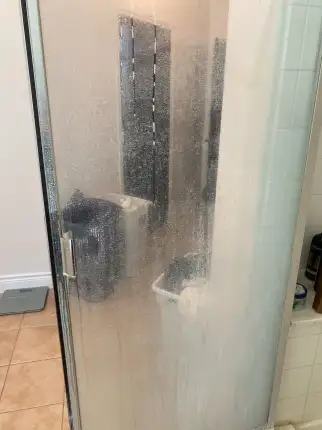

How to Remove Hard Water Stains from Glass, Faucets, and Toilets
Cloudy shower doors, chalky faucets, and stubborn toilet rings can make a freshly cleaned bathroom look unfinished. Often, the problem is mineral residue left behind by water.
To remove hard water stains, use a mineral-removing cleaner suited to the surface, gently loosen the deposits, rinse, and dry. Diluted white vinegar can help on some surfaces, while natural stone and specialty finishes require different care.
Here’s how to tackle buildup around your home without turning a cleaning project into a damaged finish.
What Causes Hard Water Stains?
Hard water contains dissolved minerals, including calcium and magnesium. As water evaporates, mineral deposits can remain on shower doors, sinks, faucets, and other frequently wet surfaces.
These deposits often look white, cloudy, or chalky. Rust-colored marks can involve iron, while other discoloration may have a different cause. Not every bathroom stain is hard water buildup.
Soap residue can also collect alongside mineral deposits, leaving a film that takes more than a quick wipe to remove.
What You’ll Need
Gather a few basic supplies:
- Microfiber cloths
- A non-scratch sponge
- A soft-bristled brush
- A shower squeegee
- White vinegar, where permitted
- A surface-compatible mineral deposit remover for stubborn buildup
- Gloves as directed on the cleaner’s label
Check the surface’s care instructions before choosing a cleaner. Never mix vinegar or acidic descalers with bleach or other cleaning products.
How to Remove Hard Water Stains from Shower Glass
Start by checking whether your shower glass has a protective coating. Some coated doors require specific cleaners.
For glass whose manufacturer permits vinegar:
- Mix equal parts white vinegar and water.
- Apply with a soft cloth. Keep the solution off nearby stone and finishes that do not tolerate acid.
- Gently wipe the cloudy areas. Use a non-scratch sponge if needed.
- Rinse thoroughly.
- Squeegee and dry. Remove remaining droplets with a microfiber cloth.
For deposits that remain, use a glass-compatible limescale remover and follow its stated treatment time. Avoid extending soaking times or switching to abrasive pads.
A squeegee after each shower helps prevent new water spots. Shower-door manufacturer Sterling also recommends routine cleaning with diluted mild detergent, followed by rinsing.
How to Remove Hard Water Buildup from Faucets
A faucet’s finish determines which cleaner you can use. Chrome, brushed finishes, decorative coatings, and specialty finishes may have different requirements.
Begin with a damp cloth and dry the faucet thoroughly. If mineral deposits remain:
- Check the manufacturer’s cleaning instructions.
- Apply an approved cleaner to a soft cloth.
- Wipe the deposits gently, including around the faucet base.
- Rinse away the cleaner.
- Buff dry with a clean microfiber cloth.
Delta recommends a 50/50 white vinegar and water solution for hard water stains on its faucets. That guidance should not be assumed to apply to every brand or finish.
Avoid wrapping an unknown finish in vinegar for an extended soak. A treatment that removes scale can also damage an incompatible coating.
How to Clean Mineral Deposits from a Showerhead
Buildup around showerhead openings may affect the spray pattern.
If your showerhead has flexible rubber nozzles designed for easy cleaning, gently rub them as directed by the manufacturer. For more stubborn deposits, follow the model’s instructions for removing and cleaning the spray face or showerhead.
Use only an approved descaling solution and soaking time. Rinse the parts thoroughly, reassemble them, and run water through the showerhead.
The same approach applies to faucet aerators: check the removal instructions before using tools or soaking the parts.
How to Remove Hard Water Stains from a Toilet
For a mineral ring inside the bowl, choose a toilet cleaner labeled for limescale or hard water deposits and compatible with the bowl material.
- Check for other cleaners. Do not add an acidic descaler when bleach or another incompatible cleaner is present, including an active tank or bowl tablet.
- Apply the product as directed. Coat the affected area.
- Allow the labeled contact time.
- Scrub with a toilet brush.
- Flush and inspect. Repeat only as the product permits.
Avoid mixing vinegar and baking soda as a descaling strategy. Their fizzing reaction consumes the acid that helps dissolve mineral deposits.
If discoloration remains after scale removal, it may require a different treatment rather than more of the same cleaner.
How to Remove Hard Water Stains from Tile and Natural Stone
“Tile” describes a shape, not a single material. Ceramic, porcelain, marble, and travertine do not all tolerate the same products.
Ceramic and Porcelain Tile
Use a mineral deposit remover labeled for the tile, and check its compatibility with grout, sealers, and nearby metal trim.
Apply as directed, gently agitate with a non-scratch sponge or soft brush, rinse thoroughly, and dry. Avoid allowing the cleaner to dry on the surface.
Marble, Limestone, Travertine, and Other Natural Stone
Start with a pH-neutral stone cleaner for routine cleaning. For actual mineral buildup, use a treatment specifically approved for that stone or consult a stone-care professional.
Vinegar, lemon juice, and other acidic cleaners can etch acid-sensitive stone. The Natural Stone Institute warns that these products may dull or etch calcareous stones such as marble and limestone.
Rubbing alcohol is not a dependable substitute for a mineral remover. A cleaner that removes surface grime may leave hardened scale behind.
How to Keep Hard Water Stains from Coming Back
A few small habits can reduce buildup between cleanings:
- Squeegee shower glass after use.
- Wipe faucets and sink surrounds dry.
- Clean light deposits before they become thick and crusty.
- Address dripping fixtures that keep surfaces wet.
- Follow a consistent bathroom cleaning routine.
Cleaning removes existing residue, but it does not change the minerals in your water. If buildup returns quickly throughout the home, consider testing the water and discussing suitable treatment options with a qualified water-treatment professional.
Why Does the Surface Still Look Cloudy?
Cloudiness does not always mean you missed a spot. Remaining marks may be soap residue, scratches, etching, or damage to a protective coating.
If a suitable cleaner stops improving the appearance, avoid stronger chemicals or harder scrubbing. Check with the surface manufacturer before continuing.
Keep Your Bathroom Looking Its Best With The CoBuilders
Regular attention to sinks, showers, and fixtures helps keep everyday residue from becoming an overwhelming chore.
Explore house cleaning services with The CoBuilders for help maintaining your home. Mention heavy mineral buildup, natural stone, or specialty finishes when requesting service so your cleaning needs can be reviewed.
Featured Posts

How to Clean Vomit Out of Carpet

How to reduce static in your home
How to clean a cutting board
How to Clean Carpet Stain: Simple Steps for Common Household Spills

Fall Cleaning Checklist: Get Your Home Ready for a Comfortable Season

Residential Cleaning: What’s Included and How to Choose the Right Service
Cleaning Near Me: How to Find the Right Local Cleaning Service

Move Out Cleaning Service: What to Expect Before You Book

Professional Home Cleaners in Baltimore, MD

Do I Get a Discount for Recurring House Cleaning in San Antonio?
"Your satisfaction is our top priority. We don't just clean spaces; we create environments where you can thrive."
Bukola Michael Nelson
Founder & CEO, The CoBuilders