
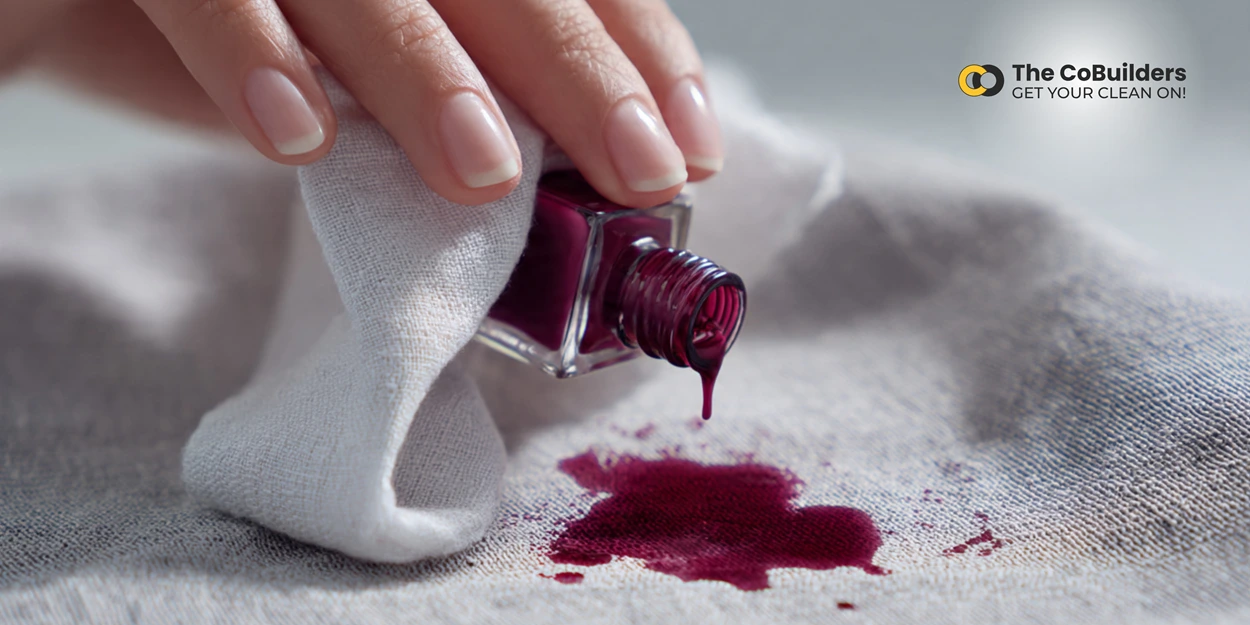
Spilling nail polish on your favorite outfit feels like a disaster in slow motion. One second you’re perfecting your manicure, and the next, a glob of vibrant, quick-drying paint is bonding with the fibers of your jeans or a silk blouse. Because nail polish is designed to be a durable, hard-wearing film, it is one of the most stubborn substances to remove from fabric.
However, a spill doesn’t have to mean the end of your garment. Whether the polish is still tacky or has already hardened into a crusty shell, there are proven, professional-grade methods to salvage your wardrobe. This guide provides a step-by-step breakdown of how to handle various fabrics, the chemistry of the solvents involved, and the common mistakes that turn a minor mishap into a permanent stain.
How to Get Nail Polish Out of Clothes
To remove nail polish from clothes, first check the garment's care label and identify the fabric. For compatible fabrics, place white paper towels underneath the stain and gently dab the area from the back using an appropriate solvent such as acetone or rubbing alcohol. Always perform a spot test first, avoid rubbing aggressively, and rinse the treated area after the polish has been removed. Do not use acetone on acetate, triacetate, or modacrylic fabrics, and consider professional cleaning for dry-clean-only, delicate, or valuable garments.
Can Acetone Remove Nail Polish From Clothes?
Acetone can dissolve nail polish effectively on some compatible fabrics, but it is not safe for every material. Always check the care label and perform a hidden spot test before using acetone. It should not be used on acetate, triacetate, or modacrylic fabrics because it can damage or dissolve the fibers.
Does Rubbing Alcohol Remove Nail Polish From Clothes?
Rubbing alcohol can help loosen nail polish from some fabrics and may be an alternative when acetone is unsuitable. Apply it carefully, allow brief contact time, and blot rather than aggressively rubbing the stain. A spot test is recommended before treating the visible area.
How Do You Remove Dried Nail Polish From Clothes?
For dried nail polish, gently lift or flake away the hardened residue with a dull edge before treating the remaining stain with a compatible solvent. Work gradually and blot the softened polish onto a clean white towel or paper towel rather than spreading it across the fabric.
What Should You Avoid When Removing Nail Polish From Fabric?
Avoid hot water, aggressive scrubbing, colored towels, and putting the garment in a dryer before the stain has been completely removed. Heat can make remaining residue more difficult to remove, while excessive rubbing or unsuitable solvents can damage fabric or dyes.
Identify The Type of Your Fabric First
Before you reach for any cleaning agent, you must check the care label. This is the most critical step in the process. If your garment contains acetate, triacetate, or modacrylic, stop immediately.
Nail polish removers, specifically those containing acetone, will literally melt these synthetic fibers. Using acetone on acetate will cause a chemical reaction that creates a hole in the fabric that cannot be repaired. If the label says "Dry Clean Only," your best bet is to leave it to the professionals. For most cotton, polyester, nylon, and linen blends, you can proceed with the following methods.
Step-By-Step: What to Do Immediately After the Spill
Method 1: Acetone (Best for Most Fabrics)
If you want to know how to get nail polish out of clothes efficiently, acetone is the heavy hitter. It is the primary solvent found in most professional-grade removers because it breaks down the polymers in the polish almost instantly.
What You’ll Need:
- 100% Pure Acetone (not the "moisturizing" kind with oils)
- White paper towels or a clean white cloth
- Cotton swabs or cotton balls
The Process:
- The Blotting Setup: Place a thick stack of white paper towels underneath the stained area. This acts as a wick to draw the liquefied polish out of the garment and into the towel, preventing it from spreading to the other side of the piece.
- The Spot Test: Dab a tiny amount of acetone on an inside seam. Wait three minutes. If the color of the fabric bleeds or the texture changes, do not use this method.
- Dab, Don't Rub: Dip a cotton swab in the acetone and gently dab the back of the stain. Working from the back of the fabric pushes the polish out of the fibers rather than deeper into them.
- Transfer the Color: As the polish liquefies, it will transfer to the paper towels below. Move the garment to a clean section of the paper towel frequently. If you stay in one spot, you’ll just be dabbing the stain back into the fabric.
- Rinse: Once the color is gone, rinse the area thoroughly with cold water to remove the solvent.
Method 2: Rubbing Alcohol
A common question when faced with a spill is, will rubbing alcohol remove nail polish? The answer is yes, but it requires a bit more elbow grease than acetone. Rubbing alcohol (isopropyl alcohol) is a milder solvent. It is less likely to damage synthetic dyes, but takes longer to break down the color.
Using rubbing alcohol to remove nail polish is often the safer choice for delicate items or fabrics where you fear color loss.
- Saturate the Area: Unlike acetone, which evaporates almost instantly, you can let rubbing alcohol sit on the stain for a minute to soften the polish.
- Scrub Gently: Use an old, soft-bristled toothbrush. Apply the alcohol and scrub in small, circular motions.
- Blotting: Use a clean white cloth to lift the loosened pigments.
- Hairspray Hack: If you don't have bottled rubbing alcohol, a high-alcohol-content hairspray can work in a pinch. Spray it directly onto the stain until it’s saturated, then follow the scrubbing and blotting steps.
Method 3: Dealing with Dried Stains
If you didn’t notice the spill until the next day, don't panic. To remove nail polish from clothes after it has dried, you need to change your strategy from absorbing to lifting.
- The Scrape: Use a dull knife, the edge of a credit card, or your fingernail to gently flake off as much of the dried polish as possible. Be careful not to pull the threads of the fabric.
- The Softening Phase: Apply a small amount of nail polish remover for clothes (either acetone-based or non-acetone) to a cotton ball and hold it against the remaining crust for 30 seconds. This re-liquefies the remaining residue.
- The Extraction: Once softened, follow the blotting steps mentioned in Method 1.
Critical Mistakes to Avoid While Removing Nail Paint from Clothes
When trying to figure out how to get nail polish out of clothes, many people inadvertently ruin their garments by following bad advice. Avoid these mistakes:
- Never use hot water: Heat sets the pigments and the plasticizers in the polish. Always use cold or lukewarm water until the stain is 100% gone.
- Don't use colored towels: Using a blue rag to clean a red nail polish stain will often result in a purple mess. Only use white cloths or paper towels.
- Don’t use Dryer: Do not put the garment in the dryer until you are certain the stain is gone. The high heat of a dryer acts like an oven, baking any remaining residue into the fibers forever.
Nail Paint Removal Treatment for Specialized Fabrics
Silk and Wool
These are protein-based fibers and are extremely sensitive. Acetone can make wool brittle and can strip the sheen off silk. For these, try the rubbing alcohol method first, but keep the contact time brief. If the stain is large, professional intervention is the only way to ensure the garment survives.
Denim
Jeans are surprisingly resilient but can be prone to frosting, where the solvent removes the indigo dye along with the polish, leaving a white/faded spot. Always blot denim and never scrub aggressively.
Synthetic Blends
Nylon and polyester are generally safe with acetone, but they can be heat-sensitive. Avoid any ironing tricks you might see online for removing wax or polish. The heat will likely melt the fabric before it melts the polish.
Bottom Line
While DIY methods are highly effective for small drips and drops, large spills or stains on investment pieces require a higher level of care. If you have tried the steps above and a shadow of the stain remains, it’s time to stop. Repeatedly dabbing a fabric with harsh solvents can eventually weaken the weave, leading to a hole.
If you find yourself overwhelmed by a stubborn stain or simply don't have the time to risk your favorite wardrobe pieces, professional cleaning services are available to ensure your garments and home textiles stay in pristine condition.
Frequently Asked Questions
1. What is the best way to get nail polish out of clothes?
The best method depends on the fabric and whether the nail polish is wet or dried. Check the care label first, then use a compatible solvent such as acetone or rubbing alcohol after performing a spot test. Blot the stain instead of rubbing it, and use clean white towels to absorb the loosened polish.
2. Can you use acetone on all types of fabric?
No. Acetone should not be used on acetate, triacetate, or modacrylic fabrics because it can damage or dissolve these fibers. Other fabrics may also react differently to acetone, so always check the care instructions and test the solvent on an inconspicuous area first.
3. How do you remove dried nail polish from clothes?
Start by gently scraping away as much dried polish as possible with a dull knife, credit card edge, or similar blunt tool. Then use a fabric-compatible solvent to soften the remaining residue and carefully blot it away. Do not put the garment in a dryer until the stain is completely gone.
4. Will rubbing alcohol remove nail polish from clothes?
Rubbing alcohol can help loosen nail polish from some fabrics and is generally a milder solvent than acetone. Apply a small amount to the stain, allow brief contact time, then gently blot or work the area with a soft brush. Always perform a spot test first to check for color or fabric damage.
5. Can professional cleaning services help remove nail polish stains from clothes?
Yes. The CoBuilders provides professional cleaning services that can help with stubborn stains and delicate home textiles, depending on the material and service scope. Professional assistance can be especially useful when a nail polish stain is large, the garment is valuable or delicate, or DIY treatment could risk further fabric damage.
Featured Posts

8.71 min read
Need a Recommendation for Apartment Deep Cleaning Service in Chicago?
8.97 min read
House Cleaning Services in Ventura, California
7.9 min read
House Cleaning Company Near Me: Why Austin, TX Homeowners Choose The CoBuilders

7.8 min read
Cleaning Service & House Cleaner Options in Portland, ME: Your Complete Guide
4.96 min read
Deep Cleaning of the House in San Jose, CA: When, Why & Who to Call

3.17 min read
How Do I Keep My House Clean with a Busy Schedule?

5.87 min read
What is the Difference Between Standard Cleaning and Deep Cleaning?
9.07 min read
A Complete Guide to Cleaning Mold with Vinegar in California Homes

6.41 min read
Top House Cleaning Companies Near Me: Finding the Best Cleaning Service in the U.S.

2.85 min read
Duct Cleaning Companies Near Me in Des Moines: Why The CoBuilders Stand Out