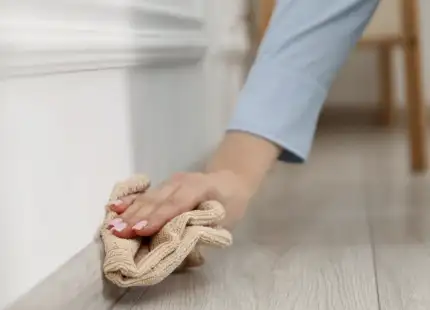

Baseboards are easy to overlook until sunlight reveals the dust along their edges. Pet hair, shoe marks, and everyday spills can also leave trim looking dull even after you have cleaned the floors.
To clean baseboards, remove loose dust first, wipe with a lightly dampened microfiber cloth, and dry afterward. For greasy spots or stubborn grime, use a small amount of mild dish soap in water if the finish allows it.
Working through one room at a time keeps this often-forgotten chore manageable.
What You’ll Need
Gather:
- A vacuum with a soft brush attachment or a microfiber duster
- Clean microfiber cloths
- Warm water
- Mild dish soap
- A soft detail brush
- A towel or kneeling pad
An extendable microfiber tool can help you reach the trim without kneeling for the entire job.
1. Clear the Area Around the Baseboards
Move lightweight items such as baskets, shoes, and small bins away from the wall. Start with the exposed sections, then work around furniture you can easily move.
Clean baseboards before your final floor cleaning so you can collect any dust that falls.
2. Remove Dust Before Adding Water
Run a soft vacuum brush or dry microfiber cloth along the top edge and front of each baseboard.
Pay attention to:
- Corners where pet hair collects
- Decorative grooves
- Areas behind doors
- Trim near heating and cooling vents
- The edge where the baseboard meets the floor
Removing dry debris first prevents it from turning into muddy streaks when you wipe.
Use a soft detail brush for narrow grooves. Avoid scraping with sharp tools.
3. Wipe Away Everyday Grime
Start with a microfiber cloth lightly dampened with warm water. Wring it out thoroughly, then wipe small sections of the baseboard.
For dirt that water does not lift, add a few drops of mild dish soap to a bowl of warm water. Test the solution on a hidden section before continuing.
Gently wipe the dirty area, then follow with a separate cloth dampened with clean water to remove soap residue.
Keep moisture from pooling along the floor or soaking into joints.
4. Dry as You Go
Wipe each cleaned section with a dry microfiber cloth.
Pay particular attention to seams, corners, and damaged edges. Painted fiberboard and unfinished wood can absorb moisture, so avoid
leaving those areas wet.
Once the trim is dry, return the items you moved and vacuum or sweep the nearby floor.
How to Clean Painted Baseboards
Painted baseboards usually need dusting followed by gentle wiping. The paint’s condition and finish affect how much cleaning it can tolerate.
Use a soft cloth and light pressure. Stop if paint transfers onto the cloth or the cleaned area starts looking shinier than the surrounding trim.
Flat paint and older finishes may mark more easily. For chipped or peeling sections, remove loose dust gently and address the paint damage
rather than repeatedly wetting the area.
How to Clean Wood Baseboards
For stained or finished wood, begin with dry dust removal. If wiping is needed, use a barely damp cloth and dry immediately.
Choose a wood cleaner only when it is suitable for the existing finish. Avoid soaking the trim or applying oil, polish, or wax simply to make it
shine; those products may not suit the coating.
If the wood is unfinished or the finish is worn away, keep routine cleaning dry and ask the installer or finish manufacturer about stain treatment.
How to Remove Scuff Marks from Baseboards
Shoe marks and vacuum bumps can look like dirt, but some are scratches or paint damage.
Try these steps:
- Dust the area.
- Wipe gently with a damp microfiber cloth.
- If needed, test a little diluted dish soap on an inconspicuous spot.
- Remove soap residue and dry.
- Check the mark before repeating.
Avoid immediately reaching for an abrasive pad. Melamine foam erasers and other abrasive tools can dull or remove paint.
If the mark is a chip or scratch, touch-up paint may be the appropriate fix.
How to Clean Kitchen and Bathroom Baseboards
Kitchen trim can collect greasy dust, especially near cooking areas. Remove loose dust first, then use the mild soap solution in small sections. Repeat gentle wiping rather than applying a strong degreaser without checking the finish.
Bathroom baseboards may collect hair, dust, and splashes. Wipe and dry them, including the sections beside the vanity and behind the door.
If you notice swelling, recurring dampness, or staining that returns quickly, investigate the moisture source. Cleaning alone will not correct a leak.
How Often Should You Clean Baseboards?
Use their appearance to guide your schedule.
A quick dusting during regular floor cleaning can help prevent buildup. Damp-wipe when you notice fingerprints, sticky spots, or grime.
Homes with shedding pets or busy entryways may need more frequent attention. Guest rooms and other lightly used spaces may need less.
Frequently Asked Questions
Can I clean baseboards without bending down?
Yes. An extendable microfiber tool or vacuum attachment can handle much of the dusting. For wiping, use a clean, lightly dampened pad that you can control along the trim.
Should I use dryer sheets on baseboards?
A microfiber cloth is a straightforward choice for dust removal. Dryer sheets may leave fragrance or residue and are not necessary for this task.
Can I use the same mop that I use on the floor?
Use a clean pad reserved for the trim. A dirty floor-mop pad can transfer grit and grime onto the baseboards.
Why do my baseboards still look dirty after cleaning?
The remaining marks may be worn paint, scratches, discoloration, or water damage. If gentle cleaning stops improving the appearance, assess the finish before using a stronger product.
Give the Details of Your Home Some Attention
Clean baseboards can make a room look more finished, especially alongside freshly vacuumed carpets and clean floors.
For help with your household cleaning routine, explore house cleaning services with The CoBuilders. Review the service details and include baseboard cleaning among your priorities when selecting the right cleaning for your home.
Featured Posts
Crawfordsville Cleaners: Find House Cleaning That Fits Your Home

How to Remove Burnt-On Food from Ovens, Cooktops, and Pans
How to Clean a Microwave | The CoBuilders

How to Clean a Laptop Screen Without Leaving Streaks
How to Clean Your Home: Practical Tips | The CoBuilders
How to Clean Stainless Steel Pans: Burnt Food, Grease, and Discoloration

Cleaning Service House Cleaner in Albuquerque, NM: Fresh Homes in the High Desert

How to Keep Your House Clean With a Busy Schedule: 10 Easy Tips
Cleaning Stains: How to Tackle Common Household Spills and Marks
How to Remove Acrylic Paint from Clothes: Wet and Dried Stains
"Your satisfaction is our top priority. We don't just clean spaces; we create environments where you can thrive."
Bukola Michael Nelson
Founder & CEO, The CoBuilders