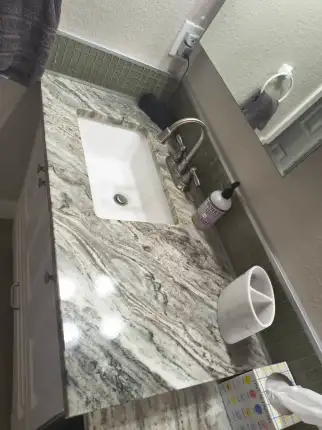

Cloudy shower doors, chalky faucet deposits, and stubborn toilet rings can make a freshly cleaned bathroom look unfinished. If these marks keep returning, hard water may be contributing to the problem.
Home cleaning professionals approach mineral buildup by matching the cleaning method to the surface. Glass, natural stone, porcelain, and decorative metal finishes do not all tolerate the same products.
This guide from The CoBuilders explains how to tackle common hard water deposits, avoid damaging your fixtures, and recognize when professional help makes sense.
What Causes Hard Water Stains?
Hard water contains dissolved minerals, particularly calcium and magnesium. When water dries on a surface, it can leave mineral residue behind. Repeated wetting and drying can create a more noticeable layer of buildup.
You may see white spots on shower glass, a chalky crust around faucets, or deposits near the waterline of a toilet.
Not every bathroom mark is mineral scale. Soap residue, rust staining, and damage to a surface can look similar. Identifying the material and the likely cause helps you choose an appropriate cleaning method.
Before You Clean: Check the Surface
Start with the manufacturer’s care instructions for the fixture, tile, glass, or countertop. A cleaner suitable for one finish may damage another.
Gather a soft microfiber cloth, a nonabrasive sponge, and a product approved for the surface. Follow the product’s directions for dilution, protective equipment, ventilation, and contact time. Test an inconspicuous area when the care instructions recommend it.
Never mix bleach with vinegar, acidic descalers, or other cleaning products. Mixing bleach and acids can release dangerous chlorine gas. Use one cleaning product at a time.
How to Clean Hard Water Deposits on Bathroom Surfaces
Glass Shower Doors
Start with the shower-door manufacturer’s recommended cleaner. Some glass has a protective coating that requires specific care.
- Apply an approved cleaner according to its instructions.
- Wipe gently with a soft cloth or nonabrasive sponge.
- Rinse thoroughly, keeping runoff away from incompatible surrounding materials.
- Dry the glass with a clean microfiber cloth.
If mineral deposits remain, check whether the manufacturer permits a dedicated hard water remover. Avoid scraping or using abrasive pads to force the marks off.
Persistent cloudiness may need professional assessment. Repeated scrubbing will not necessarily correct damage to the glass or its coating.
Faucets and Showerheads
Faucet finishes vary, so avoid wrapping every fixture in vinegar or leaving an acidic solution on it for an extended period.
Begin with the manufacturer’s recommended routine cleaning method. Some manufacturers allow a solution of equal parts white vinegar and water for mineral buildup, while other finishes require different care.
Where diluted vinegar is explicitly permitted:
- Apply it with a soft cloth rather than soaking the entire fixture.
- Follow the manufacturer’s contact-time instructions.
- Wipe gently to loosen deposits.
- Rinse thoroughly and dry.
For a blocked showerhead or aerator, follow the product’s instructions for removing and cleaning the component. Do not force parts loose or immerse a decorative finish without approval.
Toilets
Use a toilet-bowl cleaner labeled for mineral deposits and compatible with your toilet’s surface.
- Check whether any other cleaning product is already present, including an automatic bleach cleaner.
- Follow the selected product’s application and contact-time directions.
- Brush with a suitable toilet brush.
- Flush as directed.
Do not add an acidic descaler to a bowl containing bleach or an automatic bleach-cleaning product. Follow both manufacturers’ instructions before changing products.
Avoid metal tools or aggressive scraping that could damage the bowl.
Natural Stone Showers and Countertops
Marble, limestone, travertine, and other natural stone need particular care. Vinegar, lemon juice, and many acidic limescale removers can dull or etch stone.
Use a stone-safe cleaner recommended for the material and its sealer. Routine cleaning may remove surface soil without removing established mineral deposits.
If buildup remains, consult a stone-care professional. Do not assume rubbing alcohol or a stronger household cleaner is a suitable substitute for a stone-safe mineral-removal treatment.
Ceramic and Porcelain Tile
Check the tile, grout, and surrounding fixtures before choosing a product. A cleaner approved for a tile face may not be suitable for grout, metal trim, or nearby stone.
Use a compatible product, follow its directions, rinse thoroughly, and dry where practical. For stubborn deposits, ask the tile manufacturer which treatment it recommends.
How to Reduce New Hard Water Spots
Small habits between cleanings can help limit visible residue:
- Squeegee shower glass after use.
- Dry faucets and sink edges with a soft cloth.
- Wipe up standing water around fixtures.
- Follow a regular bathroom-cleaning schedule.
- Address light deposits before they become more substantial.
These steps manage surface buildup; they do not change the mineral content of your water.
If deposits return quickly throughout the home, consider asking a qualified water-treatment professional about testing and appropriate options.
When Should You Hire Home Cleaning Professionals?
Professional cleaning can help when routine bathroom upkeep is difficult to fit into your schedule or several rooms need attention.
Before booking, describe the affected surfaces and how long the buildup has been present. Photos can help communicate the condition, particularly when deposits are extensive.
Ask whether the requested mineral-removal work is included in the selected service. Routine house cleaning, detailed descaling, and surface restoration are different tasks. Severe buildup, damaged finishes, and etched stone may require specialist care.
A clear task list helps establish realistic expectations before the appointment.
Choosing Home Cleaning Professionals for Your Home
When comparing providers, look for more than a promise to make everything shine.
Ask how they identify surfaces and choose compatible products. Review professional screening information, available customer feedback, and the process for reporting a concern.
Confirm the cleaning scope and complete estimate. If you have natural stone, coated shower glass, or specialty fixtures, share the relevant care instructions before the visit.
The right cleaning plan should account for both the work needed and the materials in your home.
Book Professional Cleaning With The CoBuilders
The CoBuilders connects customers with vetted cleaning professionals and lets you select your cleaning type, rooms, bathrooms, and available extras before reviewing a personalized estimate.
For regular upkeep, explore standard house cleaning services. If your home needs occasional attention, review one-time cleaning options.
Mention hard water deposits and any delicate surfaces when arranging your service so the requested work can be reviewed before the appointment.
Get your personalized cleaning estimate and plan your next cleaning with The CoBuilders.
Frequently Asked Questions
Can home cleaning professionals remove hard water stains?
They may be able to remove surface mineral deposits with compatible products and methods. Results depend on the material, buildup, and whether the surface is already damaged. Confirm the task before booking.
Is vinegar safe for every bathroom surface?
No. Vinegar can damage natural stone and some finishes. Use it only when the surface manufacturer permits it, following the recommended dilution and contact time.
Why do hard water spots keep returning?
Water can leave minerals behind as it dries. Regular cleaning and drying wet surfaces can help manage visible residue, but cleaning does not remove minerals from the water supply.
Does deep cleaning include hard water removal?
Service definitions vary. Describe the deposits and affected surfaces, then confirm whether treatment is included or requires separate arrangements.
Should I scrub harder if the marks will not come off?
No. More pressure or abrasive tools can damage the surface. Recheck the product compatibility and seek advice if an approved method does not work.
How do I prepare for a professional bathroom cleaning?
Remove personal items where practical, identify surfaces needing special care, and explain your priorities. Share any manufacturer instructions and confirm additional tasks before the appointment.
Featured Posts

Home Cleaning Professionals’ Guide to Burnt-On Food Removal
House Cleaning Services for Seniors: Keeping Independent Living Comfortable

How Does Homeaglow Work? Understanding Online Cleaning Platforms

Homeaglow and the Rise of On-Demand Cleaning: What to Know

The CoBuilders, World’s First True House Cleaning Delivery App
Homeaglow Lawsuit: What You Should Know

Homeaglow Scam? Hidden Fees, Customer Complaints & Honest Review

Can an App for House Cleaning Services Really Simplify Your Life?
Is Homeaglow’s $19 House Cleaning Deal Legit or a Hidden Subscription Trap?

Is Homeaglow a Scam? What You Should Know Before Booking
"Your satisfaction is our top priority. We don't just clean spaces; we create environments where you can thrive."
Bukola Michael Nelson
Founder & CEO, The CoBuilders