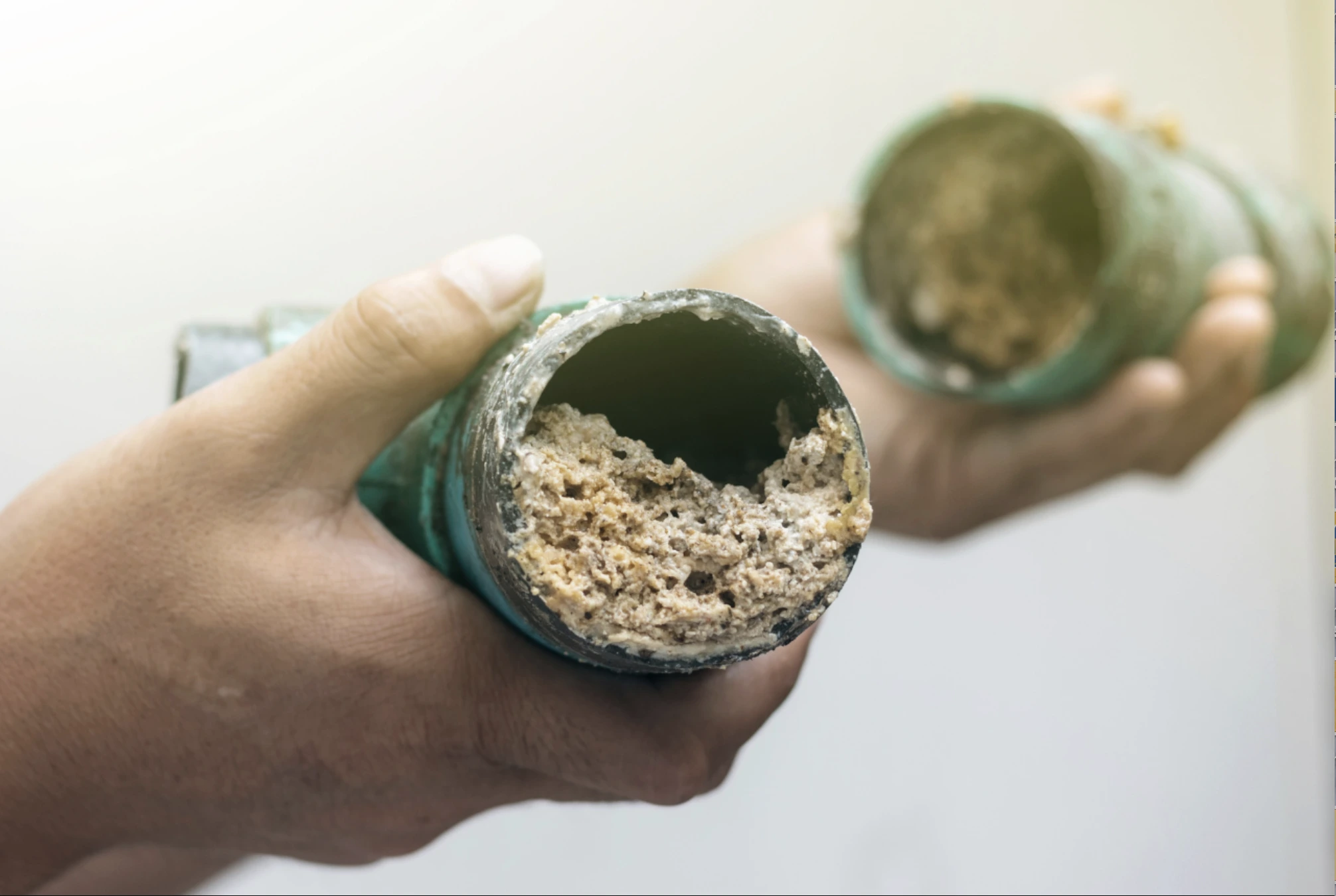
A good hard water stains cleaner can make a big difference when faucets, shower doors, sinks, tubs, and tile begin developing cloudy white spots or chalky buildup.
Hard water contains dissolved minerals such as calcium and magnesium.
When water evaporates, those minerals can remain behind on surfaces.
Over time, the deposits can become more noticeable and harder to remove.
The right cleaning method depends on the surface, how heavy the buildup is, and which products are safe to use.
What Causes Hard Water Stains?
Hard water stains form when mineral-rich water dries on a surface.
Common signs include:
- White spots
- Cloudy residue
- Chalky buildup
- Mineral rings
- Dull-looking glass
- Crust around faucets
- Deposits around showerheads
Areas that repeatedly get wet are especially likely to develop buildup.
Where Hard Water Stains Commonly Appear
You may notice hard water stains on:
- Shower doors
- Faucets
- Sinks
- Bathtubs
- Tile
- Showerheads
- Toilets
- Stainless steel fixtures
- Glass
- Countertops
Different surfaces need different cleaning methods.
Do not assume one cleaner is safe for everything.
What Is the Best Hard Water Stains Cleaner?
The best cleaner depends on the material you are cleaning.
For many compatible household surfaces, options may include:
- Mild acidic cleaners
- Commercial mineral-deposit removers
- Vinegar-based cleaners
- Surface-specific bathroom cleaners
- Non-scratch cleaning pads or cloths
Always check the product label and the surface manufacturer's care instructions first.
Some hard water stain removers are too acidic or abrasive for delicate materials.
How to Remove Hard Water Stains From Glass
Glass shower doors are one of the most common places for mineral buildup.
Start by checking whether the glass has any special coating.
Then:
- Remove loose soap residue.
- Apply a glass-safe hard water cleaner.
- Allow the product to sit for the recommended time.
- Wipe or gently scrub using a non-scratch cloth.
- Rinse if directed.
- Dry the glass completely.
Avoid harsh abrasive pads that may scratch the surface.
How to Remove Hard Water Stains From Shower Doors
Hard water stains on shower doors may build up alongside soap residue.
For lighter buildup, a compatible mild acidic cleaner may help loosen mineral deposits.
For heavier buildup, use a cleaner specifically labeled for mineral deposits or hard water stains.
Work in small sections and avoid oversaturating surrounding materials.
Drying the shower door after cleaning can help reduce new spots.
How to Clean Hard Water Stains From Faucets
Faucets often develop white buildup around:
- Handles
- Spouts
- Bases
- Aerators
Use a cleaner appropriate for the faucet finish.
Some finishes can be damaged by acidic cleaners or abrasive pads.
Avoid leaving strong cleaners sitting on plated or specialty finishes longer than recommended.
For deposits around the aerator, follow the faucet manufacturer's maintenance instructions.
How to Remove Hard Water Stains From Sinks
Sink-cleaning methods depend on the material.
Sinks may be made from:
- Stainless steel
- Porcelain
- Ceramic
- Composite materials
- Natural stone
A cleaner that works well on porcelain may not be appropriate for natural stone.
Before cleaning, confirm what the sink is made from.
Hard Water Stains on Stainless Steel
Mineral spots can make stainless steel look dull or streaky.
Use a non-abrasive cleaner suitable for stainless steel.
Wipe with the grain when applicable.
Avoid products that can damage the finish.
After cleaning, dry the surface to help reduce spotting.
Hard Water Stains on Tile
Tile may be relatively durable, but grout and natural stone can require more caution.
Ceramic and porcelain tile may tolerate some cleaners that should not be used on:
- Marble
- Travertine
- Limestone
- Other natural stone
Acidic products can damage certain stone surfaces.
If the tile or grout is specialty material, use a product designed specifically for it.
Can Vinegar Remove Hard Water Stains?
Vinegar is commonly used because its acidity can help dissolve some mineral deposits.
However, vinegar is not appropriate for every surface.
Avoid using vinegar without checking compatibility on materials such as:
- Marble
- Limestone
- Travertine
- Certain grout
- Specialty metal finishes
- Some sealed surfaces
When in doubt, use a cleaner approved for the material.
Can Baking Soda Remove Hard Water Stains?
Baking soda may provide mild abrasion on some durable surfaces.
But it should not be used automatically.
On delicate surfaces, abrasion can cause scratching or dullness.
If the surface manufacturer allows it, use light pressure and test first in a hidden area.
Can You Mix Vinegar and Baking Soda?
You may see DIY recipes combining vinegar and baking soda.
They create a visible fizz, but mixing them does not necessarily produce a stronger hard water stains cleaner.
The acid and base partly neutralize each other.
For mineral deposits, it is usually better to use one appropriate cleaner according to its instructions rather than combining multiple household products.
Can You Use Bleach for Hard Water Stains?
Bleach is generally not the first choice for mineral buildup.
Hard water stains are caused by minerals, not ordinary organic dirt.
Bleach may disinfect compatible surfaces, but it does not necessarily dissolve calcium or mineral scale effectively.
Never mix bleach with vinegar, ammonia, or other household cleaners.
How to Remove Heavy Hard Water Buildup
Heavy deposits may require more than one cleaning session.
Try:
- Using a cleaner specifically designed for mineral scale.
- Allowing the recommended contact time.
- Gently loosening buildup with a non-scratch tool.
- Rinsing or wiping according to the product label.
- Repeating if necessary.
Avoid aggressively scraping with metal tools.
Scratching the surface can create permanent damage.
Hard Water Stains in the Toilet
Mineral buildup can develop around the waterline or inside the bowl.
Use a toilet-bowl cleaner labeled for mineral deposits and follow the directions carefully.
Do not combine multiple toilet cleaners.
Some toilet-cleaning products contain strong chemicals that can react dangerously with other cleaners.
How to Clean Hard Water Buildup From a Showerhead
Mineral deposits may collect around showerhead openings.
Before cleaning:
- Check the manufacturer instructions
- Identify the finish
- Avoid harsh tools
- Use only compatible descaling products
Some removable showerheads or parts may have specific manufacturer-recommended descaling methods.
Hard Water Stains vs. Soap Scum
Hard water stains and soap scum are not exactly the same thing.
Hard water stains are mainly mineral deposits left behind when water evaporates.
Soap scum forms from soap residue, body oils, and minerals interacting on bathroom surfaces.
They can occur together, especially in showers.
A surface may therefore need both mineral-deposit removal and ordinary cleaning.
How to Prevent Hard Water Stains
Prevention is often easier than removing heavy buildup.
Dry Wet Surfaces
Use a microfiber cloth or squeegee on shower doors, faucets, and other frequently wet surfaces.
Clean Regularly
Light mineral deposits are usually easier to remove than months of buildup.
Fix Drips
A dripping faucet can continuously leave mineral deposits in the same area.
Use a Shower Squeegee
Removing water from shower glass after use can reduce visible spotting.
Clean Fixtures Before Buildup Becomes Heavy
Regular maintenance reduces the need for stronger cleaning products later.
When Hard Water Stains Keep Coming Back
If mineral buildup returns quickly, your home may have particularly hard water.
Cleaning removes the deposits already present, but it does not change the mineral content of the water.
If hard water is creating recurring issues throughout the home, you may want to investigate:
- Water hardness
- Plumbing conditions
- Water-treatment options
A qualified plumbing or water-treatment professional can evaluate those issues.
Common Hard Water Stain Cleaning Mistakes
Avoid:
- Using acidic cleaners on natural stone
- Scrubbing glass with harsh abrasives
- Leaving strong cleaners on metal finishes too long
- Mixing cleaning chemicals
- Scraping deposits with metal blades without surface guidance
- Assuming vinegar is safe for every material
- Ignoring product labels
- Allowing cleaned surfaces to air-dry with mineral-rich water still on them
The wrong product can cause more damage than the stain itself.
Choosing a Commercial Hard Water Stains Cleaner
When buying a cleaner, check:
- Which surfaces it is designed for
- Whether it removes calcium and mineral deposits
- Whether rinsing is required
- Ventilation instructions
- Required protective equipment
- Whether it is safe for the finish you are cleaning
A product marketed for bathrooms may still not be suitable for every bathroom surface.
Frequently Asked Questions About Hard Water Stains Cleaner
What is the best cleaner for hard water stains?
The best cleaner depends on the surface.
Look for a product designed to remove mineral deposits and approved for the material you are cleaning.
Does vinegar remove hard water stains?
Vinegar can help dissolve some mineral deposits on compatible surfaces, but it should not be used on every material.
What removes stubborn hard water stains?
A commercial mineral-deposit remover may be more effective for heavy buildup.
Follow the label directions and confirm surface compatibility.
Can hard water stains permanently damage surfaces?
Over time, mineral buildup can contribute to dulling, etching, or difficult-to-remove deposits on some surfaces.
Regular cleaning can help reduce buildup.
How do I remove hard water stains from glass?
Use a glass-safe mineral cleaner, gently loosen the buildup, rinse if directed, and dry completely.
What should I avoid using on natural stone?
Avoid acidic cleaners unless the stone manufacturer specifically approves them.
Acids can etch marble, limestone, travertine, and similar surfaces.
Can bleach remove hard water stains?
Bleach is generally not the best choice for mineral scale.
Hard water stains usually respond better to products designed to dissolve mineral deposits.
How can I prevent hard water spots on shower doors?
Drying the glass after use with a squeegee or microfiber cloth can help reduce mineral deposits.
A Cleaner Bathroom Starts With the Right Product
Finding the right hard water stains cleaner is less about using the strongest chemical available and more about matching the cleaner to the surface.
Identify the material.
Choose a compatible product.
Use minimal abrasion.
Follow the label.
Then dry the area thoroughly.
And if mineral buildup is only one item on a much longer cleaning list, The CoBuilders can help with the rest of the home.
The CoBuilders connects households with professional cleaners for standard cleaning, deep cleaning, recurring cleaning, and
move-in/move-out cleaning.
Featured Posts
Maid Service Atlanta: How to Find Reliable Home Cleaning in Atlanta, GA
Commercial Cleaning Companies: How to Choose the Right Cleaning Partner for Your Business
Professional Home Cleaners Near Me: How to Find Reliable Cleaning for Your Home
How to Clean a Fabric Sofa
Heavy Duty House Cleaning Services Near Me: When a Quick Tidy Just Won’t Cut It
Deep Cleaning Maid Service Near Me in Phoenix, AZ – The CoBuilders' Guide to a Healthier, Spotless Home
House Cleaning Services in Austin, Texas – Discover Why More Locals Trust The CoBuilders
Cleaning Services in San Antonio, Texas

Need a Recommendation for Apartment Deep Cleaning Service in Chicago?
House Cleaning Services in Ventura, California
"Your satisfaction is our top priority. We don't just clean spaces; we create environments where you can thrive."
Bukola Michael Nelson
Founder & CEO, The CoBuilders