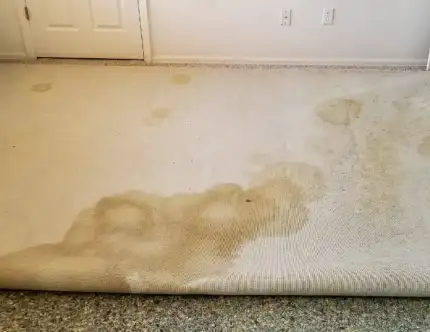

Getting cooking oil, butter, salad dressing, pizza grease, or another oily substance on your clothes can leave a dark spot that survives an ordinary wash.
One of the simplest products you may already have at home can sometimes help:
Dish soap.
Using dish soap on grease stains makes sense because dishwashing liquid is formulated to break up grease and oils on dishes
and cookware. On many washable fabrics, a small amount can also help loosen oily residue before laundering.
But there is a right way to use it.
Too much dish soap can create excessive suds. Aggressive scrubbing can damage fabric. And delicate or dry-clean-only garments may require a completely different approach.
Here's how to use dish soap on grease stains without making the problem worse.
Does Dish Soap Remove Grease Stains From Clothes?
Dish soap can help remove many grease and oil stains from washable clothing.
Grease does not dissolve easily in water by itself. Dishwashing liquid contains surfactants that help loosen oily material so it can be
lifted away during cleaning.
That makes dish soap potentially useful for stains caused by:
- Cooking oil
- Butter
- Salad dressing
- Pizza grease
- Fried foods
- Mayonnaise
- Sauces containing oil
- Cosmetics
- Some lotions
- Other oily foods
For a more comprehensive guide to oily clothing stains, see How to Get Out Grease Stain From Clothes. The CoBuilders
What Kind of Dish Soap Should You Use on Grease Stains?
A basic liquid dish soap designed to cut grease is usually the most practical option for washable fabrics.
When possible, choose a product without strong dyes that could potentially transfer to light-colored fabric.
Before applying anything:
- Check the clothing care label
- Test an inconspicuous area
- Avoid using products containing ingredients the garment manufacturer warns against
- Do not use this method automatically on dry-clean-only clothing
The goal is to treat the grease without creating a second stain.
How to Use Dish Soap on a Fresh Grease Stain
Fresh grease is generally easier to treat than a stain that has already been washed and dried.
Step 1: Remove Excess Grease
If there is food or another solid substance on the garment, carefully lift it away.
Use something dull, such as:
- A spoon
- A butter knife
- The edge of a card
Do not push the grease deeper into the material.
Step 2: Blot the Stain
Use a clean paper towel or cloth to absorb as much excess oil as possible.
Press gently.
Do not rub.
Rubbing can spread the grease beyond the original spot.
Step 3: Apply a Small Amount of Dish Soap
Place a few drops of liquid dish soap directly onto the grease stain.
You generally do not need to saturate the garment.
Use enough to cover the affected fibers.
Step 4: Work It Into the Stain Gently
Use your fingertips or a soft-bristled brush to work the dish soap gently into the stained area.
Avoid aggressive scrubbing.
The objective is to help the soap contact the oily residue, not damage the fabric.
Step 5: Let It Sit Briefly
Allow the dish soap to remain on the stain for several minutes.
Follow any applicable instructions from the garment and product manufacturers.
A heavily stained area may require more treatment than a fresh splash of cooking oil.
Step 6: Rinse or Launder According to the Care Label
Wash the garment according to its care instructions.
Use the warmest water temperature the garment manufacturer recommends rather than automatically using very hot water.
Some fabrics can shrink, fade, or become damaged at high temperatures.
Step 7: Inspect Before Using the Dryer
This step is especially important.
After washing, inspect the stained area before putting the garment in the dryer.
If you can still see the grease mark, treat it again.
Dryer heat can make an oily stain much more difficult to remove.
Air-drying the garment while you evaluate the stain gives you another opportunity to treat it.
Can Dish Soap Remove Old Grease Stains?
Sometimes.
An older grease stain can be more difficult because the oil has had time to penetrate the fibers or may already have been exposed to
dryer heat.
Try:
- Apply a small amount of dish soap to the stain.
- Work it in gently.
- Allow it time to contact the greasy residue.
- Wash according to the care label.
- Air-dry.
- Inspect.
- Repeat if necessary.
Old stains may require more than one treatment.
If repeated appropriate treatment does not remove the mark, a laundry stain remover designed for oily stains may be the next option.
What About Grease Stains That Have Already Been Through the Dryer?
A dryer does not necessarily mean the garment is ruined.
But the stain may be harder to remove.
Apply a small amount of dish soap to the dry stain and gently work it into the fibers.
Then wash according to the care label and allow the garment to air-dry.
You may need to repeat the process.
Avoid repeatedly exposing the stain to dryer heat until you're satisfied with the result.
Dish Soap on Grease Stains on Cotton
Cotton is one of the easier fabrics on which to try this method because many cotton garments tolerate ordinary laundering well.
The CoBuilders' guide to removing grease stains from cotton also recommends dish soap as one option for breaking down oily
stains before laundering. The CoBuilders
Still, check the label.
A cotton garment may contain:
- Dyes
- Screen printing
- Embroidery
- Special finishes
- Blended fibers
that change how it should be treated.
Dish Soap on Polyester Grease Stains
Polyester can hold onto oily stains particularly well.
A small amount of dishwashing liquid may help break up the grease before laundering.
Apply it directly to the affected area, work it in gently, and wash according to the garment care instructions.
Inspect the fabric before drying.
Because grease stains can be less visible when fabric is wet, allow the item to air-dry if you're unsure whether the stain is completely
gone.
Dish Soap on Cotton-Polyester Blends
Cotton-polyester blends are common in:
- T-shirts
- Work clothes
- Uniforms
- Sweatshirts
- Casual pants
Dish soap may work on these garments as well, provided the care label permits ordinary washing.
Treat only the stained area rather than unnecessarily coating the entire garment in dishwashing liquid.
Can You Use Dish Soap on White Clothes?
Yes, on many washable white garments.
But white fabric is not automatically resistant to every cleaner.
Check:
- Fabric composition
- Care label
- Decorative details
- Printed designs
- Special finishes
A plain white cotton shirt and a white silk blouse require completely different stain-treatment methods.
Can You Use Dish Soap on Colored Clothes?
Often, but test first.
Dish soap itself may contain dyes, fragrances, or other ingredients.
Apply a tiny amount in a hidden area if you are concerned about colorfastness.
Using a clear or lightly colored formula may reduce the risk of transferring additional color to a light garment.
Can Dish Soap Remove Cooking Oil Stains?
Yes, dish soap is particularly useful for many cooking-oil stains because it is designed to interact with grease.
Common examples include:
- Olive oil
- Vegetable oil
- Canola oil
- Avocado oil
- Frying oil
Blot away excess oil first, then treat the remaining stain rather than immediately soaking the entire garment.
Does Dish Soap Work on Butter Stains?
Butter contains significant fat, so the same general grease-treatment approach can be useful.
First remove any remaining solid butter.
Then blot excess grease.
Apply a small amount of dish soap to the remaining oily area and launder according to the garment instructions.
What About Pizza Grease?
Pizza grease can combine oil with:
- Tomato sauce
- Cheese
- Seasonings
- Food coloring
That means you may be dealing with more than a simple oil stain.
Dish soap may help with the greasy component, but remaining discoloration may require additional stain treatment suitable for the
fabric.
Do not continue adding random cleaners on top of one another.
Treat the stain methodically.
Can Dish Soap Remove Salad Dressing Stains?
Many salad dressings contain significant amounts of oil.
Dish soap may help break down that oily component.
However, dressings can also contain:
- Mustard
- Herbs
- Vinegar
- Food coloring
- Dairy
- Spices
Once the grease has been treated, inspect for any remaining colored stain before drying.
Dish Soap vs. Laundry Detergent for Grease Stains
Laundry detergent is made to clean clothing.
Dish soap is formulated primarily for dishes and kitchen grease.
So why use dish soap at all?
It can be useful as a small, targeted pre-treatment on an oily spot before regular laundering.
You should still wash the garment using the laundry detergent and wash cycle recommended on its care label.
Think of dish soap as a stain-treatment tool rather than a replacement for your laundry detergent.
Don't Pour Dish Soap Into the Washing Machine
This is important.
Using a few drops directly on a stain is very different from pouring dishwashing liquid into the washing machine detergent
compartment.
Ordinary dish soap can produce large amounts of suds.
That can create problems in a washing machine, especially a high-efficiency machine.
Use dish soap only as a controlled spot treatment, then wash the garment normally with the appropriate laundry detergent.
Does More Dish Soap Remove More Grease?
No.
More cleaning product does not automatically mean better cleaning.
Using too much dish soap can make it harder to rinse the product completely from the fibers.
That can leave:
- Soap residue
- Stiffness
- A different visible spot
- Excess suds during laundering
Start with a small amount.
You can always repeat the treatment if necessary.
Dish Soap and Baking Soda for Grease Stains
You will often see recommendations to use baking soda before dish soap.
A dry absorbent powder can sometimes help pull fresh surface oil away from fabric before wet treatment.
If you choose to use baking soda:
- Blot excess grease first.
- Apply baking soda to the dry oily area.
- Allow it to absorb some of the oil.
- Brush or shake it away.
- Apply dish soap to the remaining stain.
- Wash according to the care label.
Do not assume that adding more ingredients automatically makes the treatment stronger.
Dish soap may be sufficient on its own.
Dish Soap and Vinegar for Grease Stains
There is usually no need to immediately combine dish soap and vinegar.
Dish soap is useful because of its grease-cutting surfactants.
Vinegar is acidic and works differently.
Combining multiple household ingredients can also complicate stain treatment.
Start with the simplest appropriate method.
For an ordinary washable garment with an oily stain, targeted dish soap followed by proper laundering is often a more straightforward first approach.
Should You Scrub a Grease Stain?
Not aggressively.
Hard scrubbing can:
- Spread the stain
- Distort fibers
- Damage delicate fabric
- Cause pilling
- Affect the garment's appearance
Gentle agitation is usually enough.
If the stain does not respond immediately, another treatment is preferable to damaging the fabric with force.
Should You Use Hot Water on Grease Stains?
Use the water temperature recommended on the garment's care label.
Hotter water can help with some oily soils, but not every garment can safely tolerate high temperatures.
Heat may cause:
- Shrinkage
- Color fading
- Fabric distortion
- Damage to elastic or synthetic components
Never sacrifice the garment in an attempt to remove one stain.
Don't Dry the Garment Until the Grease Is Gone
A grease stain can become much harder to treat after exposure to dryer heat.
After washing:
Inspect first. Dry second.
If you still see a dark or translucent oily area, treat it again.
Air-drying is the safer choice while you're determining whether the stain remains.
Why Can a Grease Stain Reappear After Washing?
Sometimes a grease stain appears to disappear while the garment is wet.
Then the fabric dries and the darker spot becomes visible again.
This can happen because some oil remains inside the fibers.
If that happens:
- Treat again with a small amount of dish soap
- Wash according to the care label
- Air-dry
- Inspect again
Avoid increasing chemical strength simply because one treatment did not completely remove the stain.
What If Dish Soap Leaves a Mark?
Dish soap residue can sometimes create its own visible area if too much product was applied or it was not rinsed adequately.
If this happens:
- Rinse according to the fabric instructions
- Wash the garment normally
- Avoid adding more dish soap until the previous residue is removed
- Air-dry and reassess
The goal is to remove both the grease and the cleaning product.
When Should You Not Use Dish Soap on Grease Stains?
Avoid automatically using dish soap on:
- Dry-clean-only garments
- Silk
- Specialty wool garments
- Leather
- Suede
- Vintage clothing
- Delicate fabrics
- Garments with unstable dyes
- Highly structured clothing
Read the care label first.
For clothing labeled Dry Clean Only, professional dry cleaning is usually the lower-risk option. The CoBuilders
What About Grease on Dry-Clean-Only Clothes?
Do not wash the garment simply because the stain looks small.
Blot excess grease carefully without rubbing.
Then take the item to a professional dry cleaner.
Tell them:
- What caused the stain
- When it happened
- Whether you applied anything to it
That information can help the cleaner choose an appropriate stain-treatment method.
What About Motor Oil and Heavy Grease?
Motor oil, machinery grease, and industrial lubricants can be more difficult than ordinary cooking grease.
Dish soap may help with a small amount on washable work clothing, but heavy contamination can require specialized laundry
treatment.
Check the garment instructions and consider whether the clothing is worth professional cleaning.
Avoid mixing several strong degreasers together.
How to Prevent Grease Stains From Becoming Permanent
The best approach is usually early treatment.
When grease lands on your clothes:
- Remove excess material.
- Blot the oil.
- Treat the spot before laundering.
- Wash according to the care label.
- Inspect before drying.
- Repeat if necessary.
The dryer is often the point where a manageable grease stain becomes much harder to remove.
Common Mistakes When Using Dish Soap on Grease Stains
Avoid:
- Pouring dish soap into the washing machine
- Ignoring the garment care label
- Scrubbing delicate fabric
- Immediately putting the garment in the dryer
- Mixing several stain removers together
- Using the same method on every fabric
- Assuming the stain is gone while the garment is still wet
A small amount of the right product used correctly is often more effective than throwing multiple cleaning products at the stain.
Frequently Asked Questions About Dish Soap on Grease Stains
Does dish soap really remove grease stains from clothes?
Dish soap can help loosen many oil and grease stains on washable fabrics because it contains ingredients designed to break up grease.
How long should dish soap sit on a grease stain?
A short pre-treatment period is often sufficient. Follow the garment and product instructions rather than leaving cleaning products on fabric indefinitely.
Can dish soap remove old grease stains?
It may help, although an old or dryer-set stain can require repeated treatment.
Can dish soap remove grease stains after clothes have been dried?
Sometimes. Treat the stain again with a small amount of dish soap, wash according to the care label, and air-dry before evaluating it.
Which dish soap is best for grease stains?
A basic grease-cutting liquid dish soap can work. A clear or minimally colored product may be preferable for light-colored fabrics.
Can I use dish soap on cotton?
Dish soap can be appropriate for many washable cotton garments. Check the care label and spot-test when necessary.
Can I use dish soap on polyester?
It may be useful for oily stains on washable polyester. Follow the garment instructions and inspect before drying.
Can I leave dish soap on clothes overnight?
Usually there is no need to leave dish soap on fabric that long. Follow the product and garment instructions and use the shortest effective treatment.
Can I put dish soap in the washing machine?
Do not use ordinary dish soap as a substitute for washing-machine detergent. It can create excessive suds.
Should I use hot water after treating a grease stain?
Use the warmest water temperature allowed by the garment's care label rather than automatically choosing hot water.
Why is the grease stain still visible after washing?
Some oil may remain inside the fibers. Treat the stain again and air-dry rather than putting it back into a heated dryer.
Does dish soap work better than laundry detergent on grease?
Dish soap can be useful as a targeted pre-treatment because it is formulated to cut grease. Laundry detergent should still be used for the actual wash.
Dish Soap Can Be a Simple First Step for Grease Stains
Using dish soap on grease stains can be an effective first treatment for many washable clothes.
The process does not need to be complicated:
Blot away excess grease.
Apply a small amount of dish soap.
Work it gently into the stain.
Wash according to the care label.
Then check the garment before putting it in the dryer.
For more stubborn clothing stains, see The CoBuilders' complete guide to getting grease stains out of clothes. The CoBuilders
And when the grease is on more than your shirt, The CoBuilders can help with household standard cleaning, deep cleaning, move-in/move-out cleaning, and recurring cleaning.
Featured Posts

TV Screen Cleaning: How to Clean a TV Screen Without Damaging It
How to Clean Blood Out of Carpet Without Setting the Stain

Philadelphia Home Cleaning Service: How to Find Reliable Professional Cleaning
How Much Does House Cleaning Cost? A Clear Guide for Every Homeowner
Dry Cleaning: What It Is, How It Works, and When You Need It
Can You Really Get 19 Dollar House Cleaning? What to Know Before You Book
How to Clean Vomit From the Carpet Without Spreading the Stain or Odor

Finding a Home Cleaning Company Near Me in Anchorage: Why The CoBuilders Are the Right Choice
House Cleaner Job in Texas – Join The CoBuilders and Build a Meaningful Career
Eco-Friendly House Cleaning in Illinois
"Your satisfaction is our top priority. We don't just clean spaces; we create environments where you can thrive."
Bukola Michael Nelson
Founder & CEO, The CoBuilders