
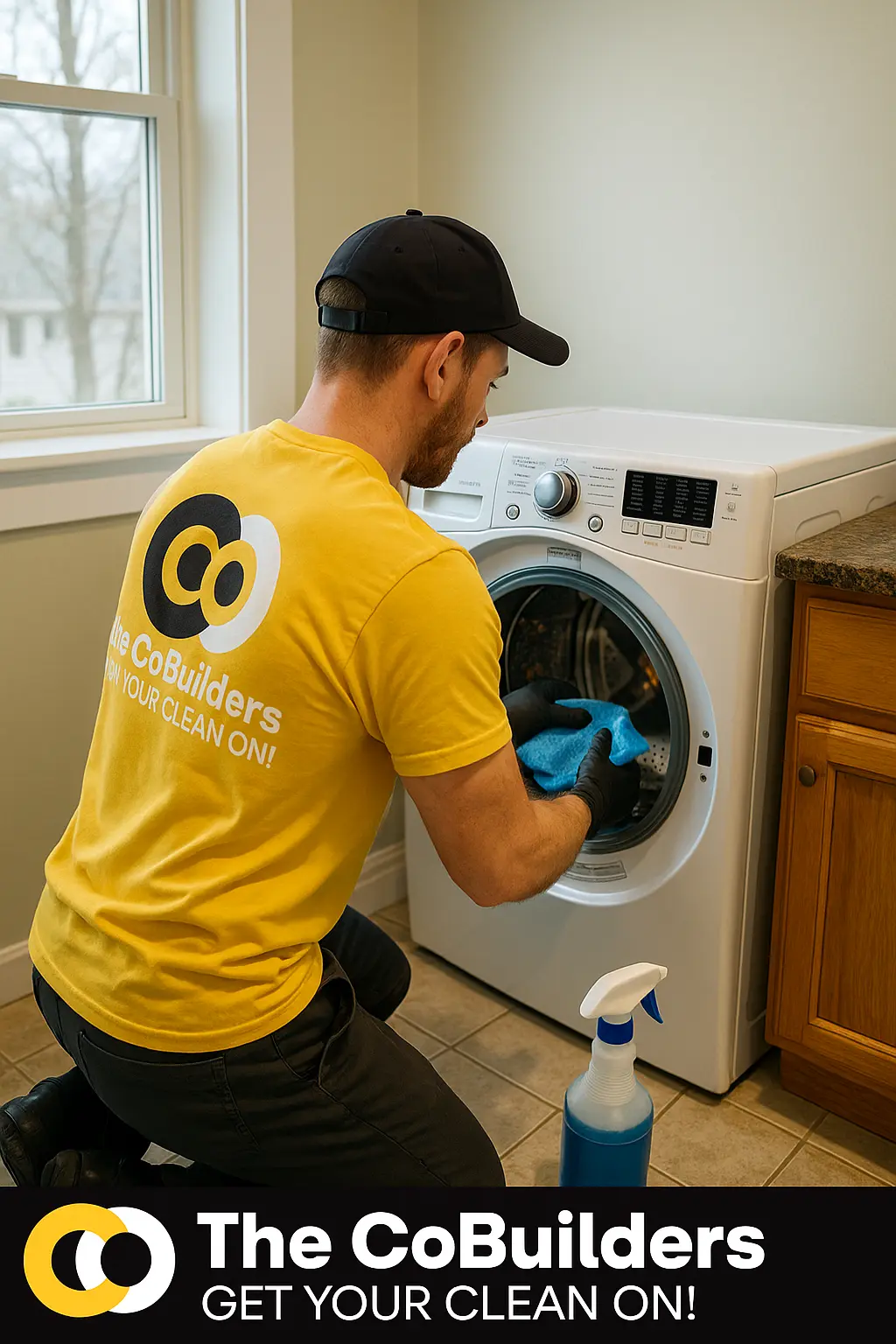
Cleaning washing machine interiors regularly can help control detergent buildup, fabric-softener residue, lint, hair, dirt, and unpleasant odors.
Even though your washing machine handles soap and water every week, that does not mean every part of the appliance cleans itself.
Moisture and residue can collect inside the drum, detergent dispenser, rubber gasket, filter, and other areas that are easy to overlook.
Whether you have a front-load or top-load washer, this guide explains how to clean your washing machine safely and keep it fresher between laundry days.
Why Does a Washing Machine Need Cleaning?
A washing machine deals with much more than clean water.
Every load can introduce:
- Dirt
- Body oils
- Hair
- Pet fur
- Lint
- Detergent
- Fabric softener
- Moisture
- Debris from pockets
Some of this material can remain inside the machine after the wash cycle ends.
Regular washing machine cleaning helps remove buildup before it becomes more difficult to manage.
Signs Your Washing Machine Needs Cleaning
You do not necessarily need to wait for the washer to look dirty.
Common warning signs include:
- Musty or stale odors
- Detergent buildup
- Residue inside dispensers
- Dirt around the door gasket
- Debris inside the drum
- Unpleasant smells when the machine is empty
- Clothes that do not smell as fresh as expected
- Visible lint, hair, or grime around the door or lid
If your washer smells even when there is no laundry inside, it is probably time for a cleaning.
How Often Should You Clean a Washing Machine?
For many households, cleaning the washer about once a month is a practical starting point.
However, frequency depends on:
- How often you do laundry
- Washer type
- Household size
- Amount of detergent used
- Whether you use fabric softener
- Whether moisture remains inside
- Manufacturer recommendations
A heavily used washer may need cleaning more frequently.
What Do You Need for Cleaning a Washing Machine?
Before you begin, gather a few basic supplies.
You may need:
- Microfiber cloths
- Warm water
- Mild dish soap
- Soft cleaning brush
- Old toothbrush
- Cleaning gloves
- Manufacturer-approved washer cleaner
Some household cleaning guides recommend vinegar, baking soda, or bleach.
However, not every cleaning product is appropriate for every washing machine.
Always check the owner's manual before putting a cleaning product inside the washer.
How to Clean a Front-Load Washing Machine
Front-loading washers require particular attention around the rubber door gasket.
1. Empty the Washer
Remove all clothing, towels, and other items.
The machine should generally be empty before running a cleaning cycle.
2. Inspect the Door Gasket
Carefully pull back accessible folds of the rubber gasket.
Look for:
- Hair
- Lint
- Dirt
- Detergent residue
- Small objects
- Moisture
Remove loose debris and wipe the gasket with a cleaner approved for your machine.
3. Clean the Detergent Dispenser
Detergent and fabric softener can leave residue behind.
If the drawer is removable, take it out according to the manufacturer's directions.
Rinse removable parts and use a soft brush to loosen buildup.
Wipe the compartment before returning the dispenser.
4. Run the Cleaning Cycle
Many washers have a cycle labeled:
- Clean Washer
- Drum Clean
- Tub Clean
- Self Clean
Follow the manufacturer's instructions for running the cycle.
Use only the recommended cleaner and quantity.
5. Wipe the Interior
After the cycle finishes, wipe the:
- Drum
- Door
- Gasket
- Accessible interior surfaces
Remove any remaining moisture or loosened residue.
6. Allow the Washer to Dry
If recommended by the manufacturer, allow airflow into the washer between loads.
Keeping the door slightly open may help moisture evaporate.
Consider household safety if children or pets have access to the appliance.
How to Clean a Top-Load Washing Machine
Top-load washers need regular cleaning too.
1. Empty the Machine
Remove all laundry before cleaning.
Check for forgotten objects inside the drum.
2. Inspect the Washer Interior
Look around:
- Drum
- Agitator
- Impeller
- Lid
- Upper rim
- Detergent dispenser
- Fabric-softener dispenser
Remove visible debris.
3. Clean the Dispensers
If removable, wash the dispensers according to the manufacturer's instructions.
Use warm water and a soft brush to remove detergent or fabric-softener residue.
4. Run the Clean Washer Cycle
Use the machine's dedicated washer-cleaning cycle if available.
Follow the owner's manual regarding:
- Cleaning product
- Water temperature
- Cycle setting
- Recommended frequency
5. Wipe Everything Down
After the cycle finishes, wipe the drum, lid, agitator or impeller, dispensers, and accessible surfaces.
Let the interior dry.
Cleaning a Washing Machine That Smells
Odor is one of the most common reasons people start cleaning washing machine interiors.
If your washer smells musty, focus on the places where moisture and residue tend to remain.
Check:
- Rubber gasket
- Detergent dispenser
- Fabric-softener compartment
- Washer drum
- Door or lid
- Accessible filter
- Areas where water collects
Clean these areas and run the manufacturer's recommended washer-cleaning cycle.
If the odor continues after a thorough cleaning, check the owner's manual for drain or filter
maintenance.
Persistent odor may indicate an appliance-maintenance issue rather than ordinary surface buildup.
How to Clean a Washing Machine Gasket
The rubber gasket on a front-load washer can trap moisture, hair, lint, and other debris.
With the washer empty:
- Inspect the gasket folds.
- Remove loose debris.
- Wipe with an approved cleaner.
- Use a soft brush for smaller areas if needed.
- Wipe away remaining moisture.
Regular gasket cleaning can help prevent buildup from becoming difficult to remove later.
How to Clean the Washing Machine Detergent Drawer
The detergent drawer is one of the easiest areas to overlook.
Over time, detergent and fabric softener can leave sticky residue.
If the drawer can be removed:
- Take it out according to the manual
- Rinse removable components
- Use a soft brush on stubborn residue
- Wipe the compartment
- Allow pieces to dry
- Reinstall correctly
Cleaning this area periodically is much easier than removing months of buildup later.
How to Clean a Washing Machine Filter
Some washing machines have owner-accessible filters.
These filters may collect:
- Lint
- Hair
- Small debris
- Coins
- Other forgotten objects
Before opening a filter compartment, check your owner's manual.
You may need to prepare for residual water.
Do not disassemble components that are not intended for routine owner maintenance.
How to Clean the Outside of a Washing Machine
The exterior deserves attention too.
Wipe down:
- Top
- Front
- Sides
- Door or lid
- Handle
- Control panel
- Buttons
- Knobs
Use a microfiber cloth and a cleaner suitable for the appliance finish.
Avoid spraying excessive liquid directly onto electronic controls.
Can You Clean a Washing Machine With Vinegar?
Vinegar is frequently recommended in DIY cleaning guides.
However, not every washer manufacturer recommends it.
Repeated exposure to acidic cleaners may not be appropriate for certain seals or components.
Before using vinegar, check your appliance manufacturer's instructions.
If the manufacturer recommends a dedicated washer-cleaning product, follow that guidance.
Can You Use Baking Soda for Cleaning a Washing Machine?
Baking soda is another popular household cleaning ingredient.
But appliance materials and designs vary.
Do not assume a DIY cleaning method that works for one washer is suitable for another.
Always check the owner's manual first.
Can You Use Bleach to Clean a Washing Machine?
Some washing machines have manufacturer-approved cleaning procedures that involve bleach.
If yours does, follow the exact amount and process specified.
Never mix bleach with vinegar, ammonia, or other household cleaning products.
Certain chemical combinations can create dangerous fumes.
How to Keep Your Washing Machine Cleaner
A few habits can reduce buildup between deep cleanings.
Remove Wet Laundry Promptly
Do not leave damp clothes sitting inside the washer longer than necessary.
Use the Correct Amount of Detergent
More detergent does not automatically mean cleaner clothing.
Excess detergent may contribute to residue inside the machine.
Wipe the Gasket
Front-load washer owners should periodically check the rubber gasket for moisture and debris.
Clean the Dispenser
Inspect detergent and fabric-softener dispensers before heavy buildup develops.
Allow Airflow When Appropriate
If recommended by the manufacturer, allowing the washer interior to dry between loads can help control lingering moisture.
Run the Cleaning Cycle Regularly
Do not wait for the washer to smell before using the machine's designated cleaning cycle.
Common Washing Machine Cleaning Mistakes
Avoid these common mistakes:
- Using too much detergent
- Mixing cleaning chemicals
- Ignoring the rubber gasket
- Forgetting the detergent dispenser
- Leaving wet laundry inside too long
- Using cleaners not approved for the machine
- Ignoring an accessible filter
- Assuming the washer cleans itself
- Using the wrong cleaning cycle
Routine maintenance usually takes much less effort than dealing with heavy buildup later.
Clean Washer Cycle vs. Manual Washing Machine Cleaning
A washer's built-in cleaning cycle is useful, but it may not clean every area.
You may still need to manually address:
- Door gasket
- Detergent drawer
- Fabric-softener dispenser
- Lid or door
- Exterior
- Accessible filters
The best approach combines the machine's cleaning cycle with routine manual cleaning.
Frequently Asked Questions About Cleaning Washing Machines
What is the best way to clean a washing machine?
Start with the manufacturer's instructions.
Generally, cleaning involves removing visible debris, wiping the gasket, cleaning dispensers, checking accessible filters, and running the washer's designated cleaning cycle.
How often should I clean my washing machine?
Monthly cleaning is a useful starting point for many households.
Your actual schedule should depend on washer usage and manufacturer recommendations.
Why does my washing machine smell?
Detergent residue, fabric softener, moisture, lint, hair, and dirt can contribute to unpleasant odors.
Pay particular attention to the gasket, dispensers, drum, and filters.
How do I clean a smelly washing machine?
Clean visible buildup, wipe the gasket and detergent dispenser, and run the manufacturer's recommended cleaning cycle.
Check filter or drain-maintenance instructions if the smell persists.
Should I put laundry detergent in the Clean Washer cycle?
Do not automatically add regular laundry detergent.
Follow your washer manufacturer's instructions regarding the appropriate cleaning product.
Can I clean a front-load and top-load washer the same way?
Not entirely.
Front-load machines typically require additional attention around the rubber door gasket.
Top-load washers may require more attention around the agitator, impeller, lid, and upper rim.
Should I clean my washer if it does not smell?
Yes.
Routine cleaning can address residue before odors or visible buildup develop.
Cleaning Your Washing Machine Is Part of a Cleaner Home
Regular cleaning washing machine maintenance can help keep your laundry area fresher and make it easier to care for the appliance.
But the washer is only one part of maintaining a clean home.
Floors need vacuuming.
Bathrooms need scrubbing.
Kitchen surfaces need wiping.
Dust continues to collect on furniture, baseboards, and fixtures.
When you'd rather spend your time doing something else, The CoBuilders can help.
The CoBuilders connects households with vetted cleaning professionals for standard house cleaning, deep cleaning, recurring cleaning, and move-in/move-out cleaning.
Book professional house cleaning with The CoBuilders and take more cleaning off your to-do list.
Featured Posts

2.25 min read
Find Trusted Cleaners Near Me in Denver, CO – The CoBuilders Difference

3.37 min read
How Can I Start a Cleaning Business? A Beginner’s Guide to Getting Started the Right Way

3.84 min read
How Do I Start a Cleaning Business? A Step-by-Step Guide to Launching Smart

3.95 min read
How Do You Start a Cleaning Business? A Step-by-Step Guide for First-Time Entrepreneurs

3.52 min read
5 Easy and Effective Ways to Remove Grease Stains from Clothes

3.94 min read
Deep Clean Kitchen Service: Bring Back the Heart of Your Home

5.39 min read
Cleaning Your Laundry Machine in Louisville, KY: The Ultimate Guide for Sparkling Fresh Loads

3.67 min read
AI for Government Contractors: How The CoBuilders Is Revolutionizing Downtime Management and Work Tracking

3.95 min read
What the ‘No Tax on Tips Act’ Means for Cleaners and the Cleaning Industry

2.78 min read
Home Glow Cleaning Service: What You Should Know Before You Book—and a Trusted Alternative